Hamit Melikoğlu
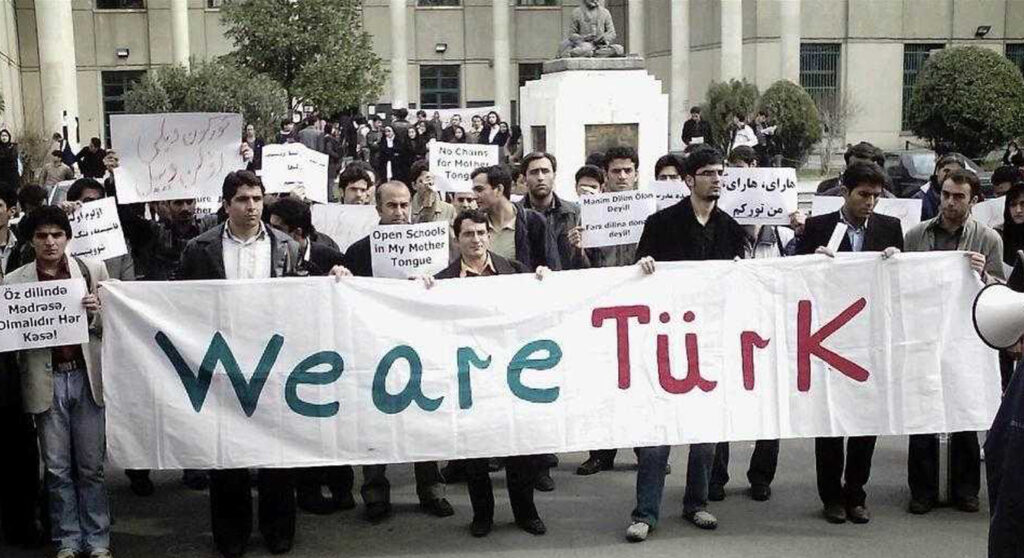
This assessment examines the linguistic geography of the Turkish communities living within Iran’s borders and the possibility of establishing a common standard Turkish language among these communities. Although the Turkish presence in Iran is generally confined to the region of South Azerbaijan, the actual picture points to a vast linguistic continuum extending from Hamadan to Fars Province, and from Khorasan to Turkmen Sahra. By comparing the structural proximity among existing dialects with the standardization experience of Persian, this article discusses the potential role Turkish could assume as a language of public representation and education in a possible future democratization process.
Academic and political debates concerning Turkish communities in Iran have long been confined within a narrow regional framework. This approach defines Iranian Turks solely through the axis of Tabriz, Urmia, Ardabil, and Zanjan, while excluding millions of Turks living in the central and southern parts of the country from analysis. However, linguistic evidence demonstrates that Turkish forms a connected network across the Iranian plateau, stretching from the northwest to the south and from the center to the northeast.
At present, the fundamental question is whether the different dialects spoken across this vast geography can unite under a common literary and administrative standard. In modern state structures, standard languages are not merely the result of natural evolution; they are conscious constructions shaped by education, media, and bureaucracy. This article evaluates the sociolinguistic possibilities of such a standardization based on the distribution of Turkish dialects in Iran and the phenomenon of “linguistic continuity” among them.
1. The Geography and Distribution of Turkish Languages in Iran
The Turkish presence in Iran constitutes a structure that transcends administrative borders and spreads across various provinces. The region with the densest population and regarded as the heart of cultural production is South Azerbaijan. However, the Turkish linguistic sphere does not end there. Hamadan, Qazvin, Zanjan, and parts of Markazi Province, as well as Fereydunshahr, Fereydan, Buin and Miandasht, and Chadegan in Isfahan Province, form transitional zones where Turkish has penetrated deeply into Iran’s interior.
In the west, the Bijar and Qorveh regions of Kurdistan Province and the Sonqor district of Kermanshah are strategic areas where Turkish populations have historically settled. In the south, the Qashqai Turks living in and around Fars Province constitute a large community that has preserved its language despite geographical isolation. In the northeast, the Khorasan Turks and Turkmen Sahra form the eastern wing of Iran’s Turkish geography, while the Khalaj regions in central Iran preserve some of the most archaic layers of the language. This distribution confirms that Turkish in Iran is not merely a local dialect but rather a nationwide “communication sphere.”
2. Structural Proximity and Linguistic Continuity Among Dialects
One of the strongest aspects of Turkish in Iran is the absence of sharp fragmentation among dialects despite differing names. This phenomenon, defined in linguistics as a “dialect continuum,” manifests itself in the mutual intelligibility of neighboring dialects and the remarkable structural similarities between geographically distant dialects such as Azerbaijani Turkish and Qashqai Turkish.
Most Turkish dialects in Iran belong to the Oghuz branch. A comparison between Azerbaijani Turkish and Qashqai Turkish reveals significant overlap in sentence structure, verb conjugation systems, and core vocabulary. Khorasan Turkish, despite intensive contact with Persian, has preserved this Oghuz core. Although Turkmen Turkish and Khalaj exhibit more distinct phonetic differences, they still remain within the general logic of the Turkic language family. This structural commonality provides more than sufficient “linguistic raw material” for the construction of a common standard language.
3. The Carrier Role of Azerbaijani Turkish
Every standard language generally emerges through the most developed and widely cultivated dialect. In the Iranian case, Azerbaijani Turkish naturally assumes this leadership due to its number of speakers, urbanized population, rooted literary tradition, and modern cultural production capacity. Cultural content produced in Tabriz and surrounding cities—the center of South Azerbaijan—is today followed not only in Azerbaijan but also by broad audiences ranging from the Qashqai Turks to the Turks of Khorasan.
Moreover, the high degree of mutual intelligibility between this dialect and Turkish spoken in Türkiye connects Turkish in Iran to the broader literature of the Turkic world. Therefore, regarding modern scientific terminology, literary forms, and contemporary global concepts, South Azerbaijani Turkish can serve as a “bridge” between Turkish spoken in Türkiye and other Turkish dialects in Iran.
4. The Standardization Model: The Persian Experience
Criticisms regarding the difficulty of creating a common language can often be answered by examining the historical development of Persian itself. What is recognized today as “standard Persian,” built upon the Tehran dialect, is in fact a product of the last century. Although local accents and dialects in Yazd, Kerman, Mashhad, and Shiraz sometimes display profound differences, a single standard language was institutionalized through centralized education, radio, television, and bureaucracy.
The success of Persian is therefore related less to the language’s internal dynamics than to the power of institutions. Consequently, the fragmented structure confronting Turkish in Iran is not an insurmountable obstacle if approached through proper institutionalization and educational policies. If Turkish were to gain the right to function as a language of education and public representation, a similar standardization process could occur even more rapidly, because the structural gap among Turkish dialects is not greater than the gap among Persian dialects.
5. The Socio-Political Necessity of a Common Standard Language
A common standard language is not necessary to eliminate local diversity, but rather to enable these communities to defend their rights effectively. In multilingual societies, education, judicial affairs, and administrative processes require a mutually agreed literary language. Beyond improving mutual understanding among different Turkish groups in Iran, a standard Turkish language would enable this population to be represented as a single strong voice in the public sphere.
The internet, social media, and satellite broadcasting have already initiated this process “from the bottom up.” Supporting this organic process with academic studies and educational materials would enhance its quality and effectiveness.
6. Future Projections and Language Rights
Decentralization models that stand out in discussions regarding Iran’s future place language rights at their center. Turkish, spoken by approximately 40 percent of Iran’s population, should possess not merely a regional but a nationwide official status within these models.
If Iran, in its democratization process, were to recognize Turkish with an official status and a common standard, this could help the country construct its territorial integrity upon the foundation of cultural diversity.
Conclusion
The Turkish presence in Iran represents an enormous cultural potential through its wide geographical distribution and interconnected dialects. The existing “linguistic continuity” provides sufficient grounds for the construction of a common standard Turkish language. Such standardization is not only a literary and scientific necessity but also a political one, constituting the key to sustaining Iran’s multilingual structure in a democratic manner. Ultimately, Turkish in Iran is not merely a collection of local dialects but one of the most important foundational elements that will shape the country’s future.