A Sociological Analysis of the Transition from the Politics of Terror in Iran
Dr. Emre Chakir
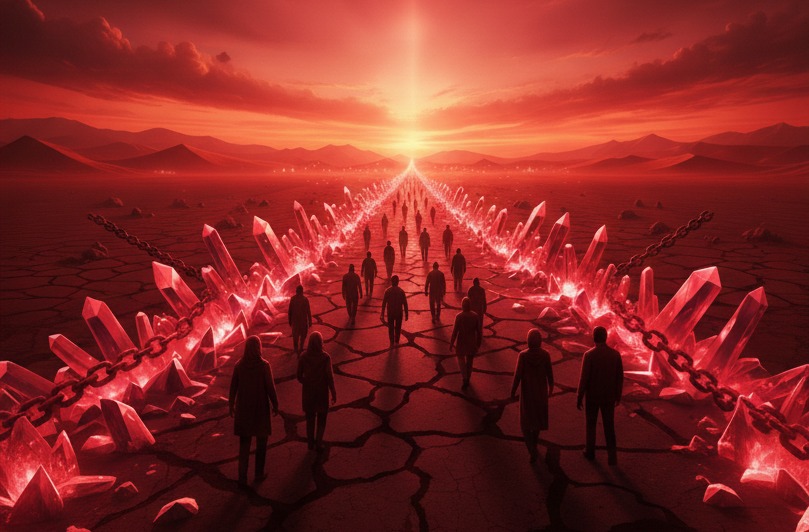
Fear as a Tool of Governance
In the field of political science and the sociology of power, “fear” has always been examined as one of the oldest and most complex instruments of rule. From ancient city-states to the totalitarian regimes of the 20th century and contemporary authoritarian systems, the creation of fear has functioned not only as a means of physical repression but as a grand strategy for survival in the absence of democratic legitimacy.
In modern political history, fear has often replaced rational politics. Yet historical evidence and contemporary trends show that fear, contrary to rulers’ assumptions is not a renewable resource. When used continuously, it erodes and ultimately collapses. This report provides a deep analysis of the mechanisms of this erosion, focusing on the experience of the Islamic Republic of Iran and comparing it with global patterns.
Fear as Strategy in Authoritarian Regimes
Fear becomes a coherent strategy when it operates simultaneously on three levels:
- Paralyzing social will internally,
- Creating external deterrence, and
- Projecting absolute power in the symbolic realm.
Authoritarian regimes use this triadic model to raise the cost of dissent so high that silence and passivity appear to be the most rational options for citizens.
In the political and religious discourse of the Islamic Republic, this strategy is framed ideologically as “al-nasr bil-ruʿb” (“victory through terror”). Rooted in certain religious texts, this idea suggests that defeating opponents comes not through persuasion or military victory but through instilling fear in them. Historical reports indicate that this view has underpinned many security operations in recent decades, including chain murders and brutal public executions.
However, the paradox is that when fear becomes the sole tool of governance, the system enters a phase of “violence inflation,” where each unit of violence produces less effect than before. Wherever fear replaces politics, the political system suffers from a kind of “diplomatic and civic poverty,” which gradually leads to psychological erosion of power. This erosion begins when society becomes accustomed to fear-inducing stimuli—when fear is, so to speak, “consumed.”
Historical Cases of the Collapse of the Politics of Fear
The Soviet Union: From Stalinism to Psychological Erosion
For decades, the USSR relied on the KGB and the Gulag system to create a climate of pervasive terror. Fear was not just a repression tool but part of everyday life. Yet by the 1980s, Soviet society had reached a stage where it no longer feared this apparatus. Fear gave way to apathy, mockery of elites, and silent disobedience.
The collapse of the Soviet Union was not the result of a bloody civil war but of gradual psychological erosion of power that could no longer generate effective fear.
East Germany and the Stasi Paradox
The Stasi was one of the most feared security agencies in the Eastern Bloc, using an extensive network of informants to crush dissent. Fear permeated even private spaces. Yet in 1989, when people took to the streets in Leipzig and Berlin, it became clear that this power was hollow. Once crowds reached a critical mass, individual fear turned into collective courage, and the security forces—despite being armed—lost the will to shoot.
This shows that fear works only when society is atomized and fragmented.
Tunisia and Egypt: The Breakdown of the Fear Aura
In Ben Ali’s Tunisia and Mubarak’s Egypt, regimes relied on secret police and notorious prisons. In both cases, their fall began not with state collapse but with the breakdown of the “aura of fear.”
In Tunisia, the security apparatus collapsed within weeks because the army refused to sacrifice itself for a regime that had lost psychological legitimacy. In Egypt, the military concluded that keeping Mubarak was costlier than removing him, as society was no longer intimidated by displays of power.
Syria: A Bloody Exception
Under Bashar al-Assad, Syria preserved regime survival through limitless violence. But this survival came at the cost of societal collapse, economic ruin, loss of national sovereignty, and foreign intervention. This can be called “survival without a state”—where power structures remain, but governance has lost meaning.
The Islamic Republic and the Strategic Crisis of Fear Production
The Islamic Republic now faces a structural paradox: despite possessing vast repressive tools, it has lost the ability to generate “effective fear.”
Internal Level: Society Has Consumed Fear
Unlike the early revolutionary decades, Iranian society today is young, educated, and highly informed. After successive uprisings (2009, 2017, 2019, 2022), society has reached a state of psychological saturation. Executions, arrests, and threats no longer deter; instead, they erode legitimacy and fuel anger.
Documented reports from protests in Dey 1404 (December 2025–January 2026) show that popular uprisings have entered a new phase. What began as economic protests in Tehran’s bazaar quickly turned into explicitly political slogans against the entire system. Protests were reported in Abdanan, Isfahan, Ilam, Tehran, Zahedan, Sabzevar, Izeh, and Hamedan.
Notably, in places like Sarableh in Ilam province, protests reportedly took on armed dimensions—indicating that in areas of deeper poverty and discrimination, fear collapses faster.
External Level: Collapse of Psychological Deterrence
Internationally, Iran’s regional “politics of terror” has given way to rational cost-benefit calculations by actors like the U.S. and Israel. The psychological deterrence once built on fear and proxy networks has significantly eroded. Fear as a foreign policy tool has reached diminishing returns.
Sociological Analysis of the January 2026 Protests
Shift in Discourse
A striking feature of these protests is the absence of the slogan “Woman, Life, Freedom” outside university spaces. This suggests a paradigm shift—from rights-based demands to outright political confrontation and rejection of the regime. Slogans like “Death to Khamenei” and “We don’t want the Islamic Republic” dominated.
Bazaar and Middle Class Crisis
Protests began in Tehran’s bazaar, traditionally a regime-supporting or at least regime-tolerant class. Economic slogans such as “Death to inflation” and “Poverty, corruption, high prices—we march until overthrow” reveal a deep link between economic crisis and political rage. When the middle class feels its survival is threatened, fear of repression gives way to survival instincts.
Why Fear No Longer Works
Fear is effective only if it is: Limited,Targeted, and Accompanied by a horizon of reward or relief.
In stable authoritarian systems, fear is used as a penalty for specific actions, while citizens are assured that compliance ensures safety.
In today’s Iran, fear has become permanent and pervasive—governing dress, social media, lifestyle, and even casual speech. With no hope for improvement, fear turns into defiance, producing what can be called “courage born of despair.”
Sociologically, the Iranian state now has objective power (weapons, security forces, surveillance technology) but has lost subjective authority (psychological control over citizens). This is the most dangerous condition for any regime because security forces themselves are part of society and subject to this erosion.
Global experience shows that when security forces realize society is no longer intimidated, their willingness to shoot collapses.
Two Possible Paths Ahead
Fear-based regimes ultimately face two options:
- Political transition — accepting fundamental change before violence destroys the country.
- Gradual erosion and collapse — clinging to power while society descends into poverty, violence, and disintegration.
The key question today is not whether fear works, but: What will replace fear after its collapse?
Can Iranian society navigate this moment through civic awareness and political organization, or will it slide into more violent scenarios?
Conclusion
The strategic erosion of fear is an undeniable reality in Iran’s political landscape. A regime that once relied on “victory through terror” now faces a society that has consumed fear and is rewriting the rules of post-terror politics.
As history shows, walls of fear may stand for years, but once cracks appear, they can collapse rapidly—and irreversibly. No amount of violence can restore lost mental authority.