Behbud Bash
Executive Summary
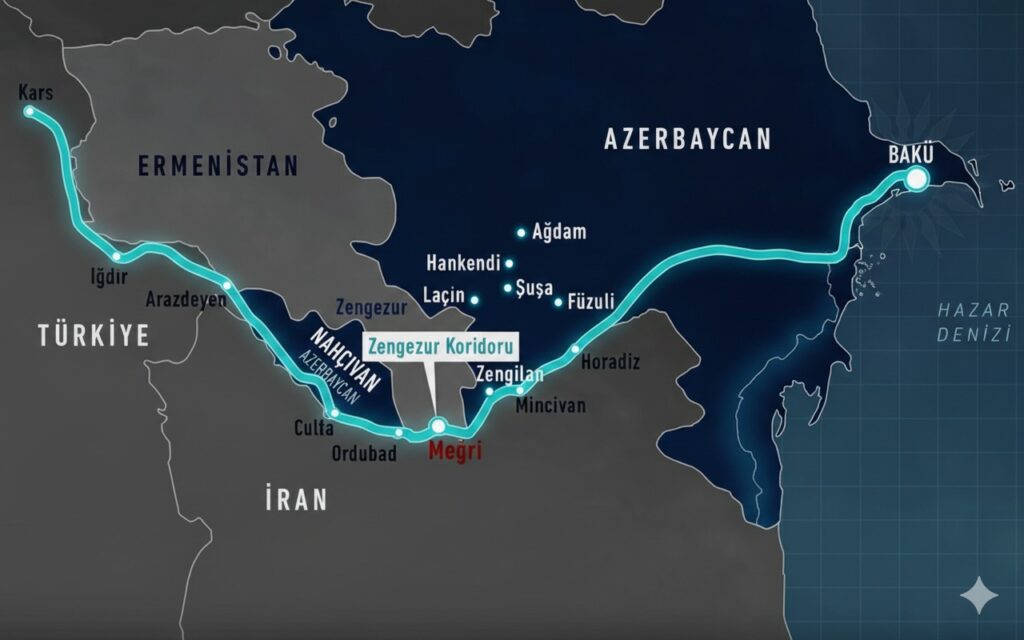
The re-election of Donald Trump as President of the United States in 2025, followed by the 12-day war between Iran and Israel, weakened Iran’s regional deterrence architecture and triggered a significant restructuring of the balance of power in the South Caucasus. In this context, the “Trump Route for International Peace and Prosperity” (TRIPP) agreement—brokered under U.S. auspices and signed between Armenia and Azerbaijan—has established the institutional foundation of a new geopolitical and geoeconomic order in the South Caucasus.
The core argument of this report is as follows: Iran’s traditional security-centric and deterrence-based strategy toward the South Caucasus is no longer sustainable in the face of the emerging multi-actor, U.S.-supported transportation architecture. Therefore, Iran must adopt an integration-based geoeconomic strategy instead of a confrontation-based geopolitical approach.
The proposed “Game-Changer Strategy” is built upon three pillars:
- Rapid development of the Aras Corridor and integration into the regional transit system
- Institutional engagement with the Organization of Turkic States (OTS)
- Repositioning Iran as an indispensable energy and transportation hub of Eurasia
This strategy could reduce Iran’s risk of regional isolation and enhance its long-term economic resilience.
Key Findings
- The TRIPP Corridor is not merely a transportation project, but a long-term U.S.-backed geopolitical restructuring initiative.
- Iran’s traditional deterrence strategy has partially lost credibility in the post-2025 strategic environment.
- Russia has reduced its influence in the South Caucasus due to the Ukraine war, weakening its role as a regional balancer.
- China is adopting a pragmatic rather than ideological approach and is investing in alternative trade corridors that bypass Iran.
- The Organization of Turkic States represents not a threat but a strategic integration opportunity for Iran.
1. Introduction: The Changing Geopolitical Environment
The year 2025 marked a strategic turning point for both the South Caucasus and the Middle East. The renewed regional engagement of the United States and Iran’s exposure to military and economic pressure have initiated a new phase in regional power architecture.
The TRIPP agreement demonstrates the United States’ intention to establish a permanent strategic presence in the South Caucasus. This development has created a new U.S.-supported geopolitical reality along Iran’s northern borders.
2. Strategic Analysis of the TRIPP Corridor
2.1 Physical and Operational Characteristics
- Length: 43 kilometers
- Location: Syunik Province, Armenia
- Operational duration: 99 years
- Operator: U.S.-led international consortium
The corridor will include:
- Railway infrastructure
- Highway connections
- Energy pipelines
- Digital communication infrastructure
2.2 Geoeconomic Objectives
The primary objectives of the corridor are:
- Strengthening the Middle Corridor
- Bypassing Iran and Russia
- Accelerating China–Europe trade connectivity
3. Great Power Competition and Iran’s Shrinking Strategic Space
3.1 Russia’s Declining Influence
Russia’s strategic priorities include:
- The war in Ukraine
- Managing economic sanctions
- Maintaining domestic economic stability
These factors have limited Russia’s active strategic role in the South Caucasus.
3.2 China’s Pragmatic Approach
China’s priorities include:
- Secure and efficient trade routes
- Economic efficiency over political alignment
This trend weakens Iran’s traditional transit advantage.
4. Alternative Strategy for Iran: Geoeconomic Integration
4.1 Strategic Importance of the Aras Corridor
The Aras Corridor represents a critical strategic opportunity for Iran.
Potential advantages include:
- Increased transit revenues
- Strengthened regional connectivity
- Deeper economic integration
4.2 Strategic Engagement with the Organization of Turkic States
The core capacity of the OTS includes:
- Population: 180 million
- Combined GDP: $2 trillion
- Expanding transportation networks
Potential benefits for Iran include:
- Increased trade volume
- Expanded energy export opportunities
- Reduced economic isolation
5. Iran’s Strategic Advantages
5.1 Geographic Position
Iran serves as a critical connectivity point between the Indian Ocean and Eurasia.
5.2 Energy Capacity
Iran possesses some of the world’s largest natural gas and oil reserves.
5.3 Demographic and Economic Capacity
- Population: 85 million
- Large domestic market
- Strong industrial base
6. Strategic Roadmap
Short Term (0–2 years)
- Rapid completion of the Aras Corridor
- Regional economic diplomacy initiatives
- Technical cooperation with the OTS
Medium Term (2–5 years)
- Formal partnership with the OTS
- Integration into regional transit systems
Long Term (5–10 years)
- Transformation of Iran into a regional energy hub
- Full integration into Eurasian transportation networks
7. Policy Recommendations
Recommendations for Iranian decision-makers:
- Transition from a security-centric strategy to an economic integration-centric strategy
- Prioritize investment in transit infrastructure
- Increase multilateral diplomatic engagement
- Participate in regional economic cooperation mechanisms
Conclusion
The TRIPP initiative presents not only a strategic threat but also a significant strategic opportunity for Iran.
To safeguard its long-term national interests, Iran must transition:
- From a geopolitical resistance approach
- To a geoeconomic integration strategy
This transformation could enable Iran to play a central role in Eurasia’s emerging transportation and energy architecture.