Dr. Amir Mohammadpour
The geopolitical developments in the South Caucasus following the Second Karabakh War in 2020 and the new regional configurations between 2024 and 2026 have established the Republic of Azerbaijan as a pivotal actor in the regional security system. However, despite Baku’s military and diplomatic advancements, its public diplomacy when engaging with non-Azerbaijani segments of Iranian society has consistently faced fundamental challenges. This policy paper, with a strategic and impartial perspective, analyzes the roots of Baku’s failure to penetrate various layers of Iranian society and, by identifying latent potentials, outlines a roadmap for transitioning from confrontation to positive influence. Analyses indicate that despite possessing soft power assets such as a secular development model, modern urban infrastructure, and shared intellectual heritage, Baku has been unable to become an attractive soft power for the general Iranian public due to its reliance on ethno-centric approaches.
Fundamental Analysis of the Roots of Public Diplomacy Failure in Iran’s Non-Turkish Sector
The Republic of Azerbaijan’s public diplomacy towards Iran over the past decades has been heavily overshadowed by security perspectives and identity rivalries. Instead of focusing on creating an inclusive and appealing image for the entire Iranian nation, Baku has primarily concentrated on Turkish-speaking audiences in the northwestern provinces (South Azerbaijan). This has unintentionally triggered “ontological security” concerns in other segments of Iranian society.
One of the biggest obstacles in Baku’s public diplomacy path is the use of ethno-centric language prevalent in Baku’s political and media circles. Although this approach might mobilize a portion of ethnic minorities in the short term, in the long run, it provokes a severe negative reaction among the Persian-speaking majority and other Iranian ethnic groups who consider the country’s territorial integrity a red line. When Azerbaijani elites and media speak of “liberating historical lands,” this message is interpreted by Iran’s non-Turkish society not as a cultural move but as a direct threat to Iran’s national existence.
Strategic analyses show that this “ethnic trap” has enabled the Iranian government to easily portray any diplomatic or cultural action by Baku as part of a separatist project supported by the West or Israel. In fact, instead of being a bridge for connection, Azerbaijan’s public diplomacy has become a tool for reinforcing state paranoia in Tehran.
The second structural obstacle is Baku’s deep military and security partnership with Tel Aviv. From the perspective of a large part of Iranian society, even segments not necessarily aligned with the official policies of the Islamic Republic, the prominent presence of Israeli drones and espionage equipment on Iran’s northern borders is viewed as a threatening factor. By continuously publishing reports on electronic eavesdropping stations and the potential use of Azerbaijani territory for drone attacks, Iranian state media have portrayed Baku’s image as a “regional collaborator for Israel.”
This situation has prevented Azerbaijan from projecting an image of an independent and benevolent neighbor. Even during Iran’s internal crises in 2025 and 2026, Baku’s inability to separate its strategic relations with Israel from its public diplomacy with the Iranian people caused the potential for cultural solidarity to be overshadowed by security concerns.
Cultural Heritage Diplomacy and the War of Narratives
The conflict over cultural heritage has become a serious point of friction in public diplomacy. Baku’s efforts to “Azerbaijanize” figures such as Nizami Ganjavi are perceived by the non-Turkish cultural and academic community in Iran as historical distortion; while Baku considers him its national poet due to his birth in Ganja, Iranian elites emphasize his Persian language and Iranian civilizational roots. This conflict extends to handicrafts like carpet weaving; Azerbaijan presents this art, with ancient roots in the second millennium BC, as its exclusive heritage, whereas in Iran it is seen as a shared heritage of the Iranian civilization sphere with regional diversity. Even in Mugham music, which Baku considers the hard core of Azerbaijani identity, deep structural ties with Iranian musical radifs are undeniable. This “war of narratives” has caused even joint cultural projects to be viewed with suspicion.
Azerbaijan’s Soft Power Potential and Opportunities for the Iranian Audience
Despite the mentioned obstacles, the Republic of Azerbaijan possesses unique assets that, with a change in approach, could positively impact Iranians. Baku’s modern infrastructure is currently highly attractive for tourism and shopping, but the real potential lies in presenting Azerbaijan as a model of non-oil economic development.
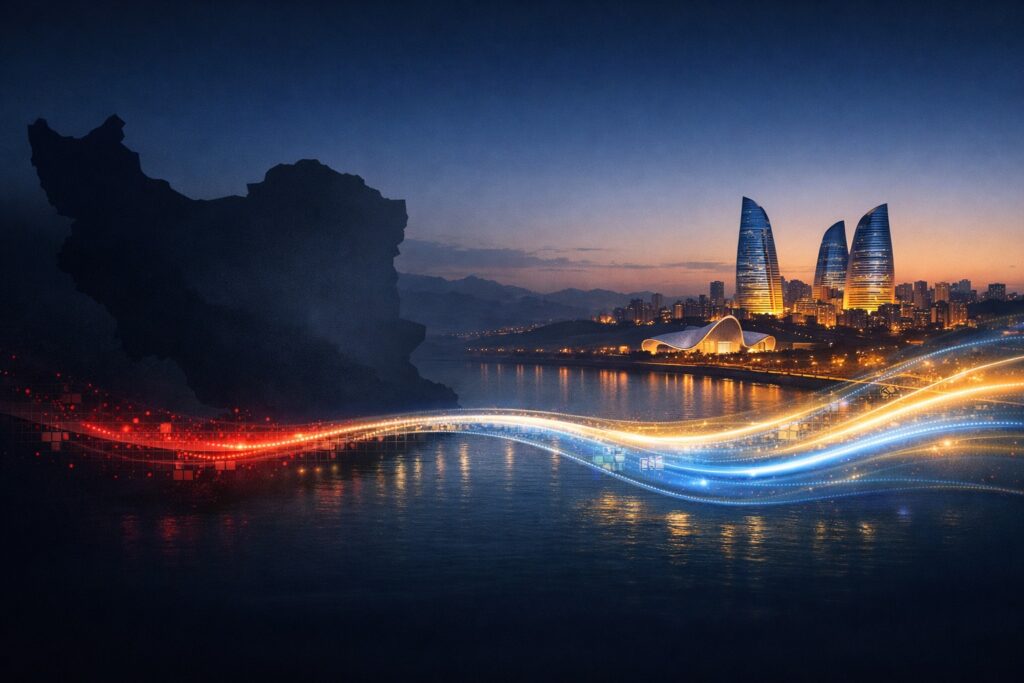
In recent years, Baku has become a symbol of rapid development and modernization in the Muslim world. Baku’s avant-garde architecture, from the Heydar Aliyev Center to the Flame Towers, presents an image of progress that is highly appealing to Iran’s urban middle class, weary of ideological restrictions. The “Azerbaijani model,” where secularism is balanced with Islamic identity, although portrayed in Iran’s state narratives as a threat to religion, could be presented as a model of coexistence between religion and modernity, an alternative to governance in the eyes of Iranian elites and youth.
This appeal is clearly visible in the tourism sector. For Iranian tourists, Baku is not just a beautiful city but a space where they can experience a degree of social freedoms and modernity in an environment with similar culture and taste in food (such as pilaf, dolma, and kebab).
One of the most neglected potentials of public diplomacy is the role of intellectual circles in Baku and Tbilisi in Iran’s reformist movements. The satirical magazine “Molla Nasreddin,” published in these regions in the early 20th century, had a tremendous impact on the political and social awareness of non-Turkish Iranians and even pro-constitution elites. This shared heritage, focused on concepts like women’s rights, educational reform, and combating superstition, can serve as an intellectual bridge connecting modern Azerbaijan to the historical aspirations of Iranians.
Azerbaijan’s Position as a Diplomatic Hub (The Baku Model)
In 2025 and 2026, by adopting a multifaceted foreign policy, Azerbaijan has positioned itself as an intermediary for dialogue between conflicting parties. Baku’s role in facilitating indirect talks between Syria and Israel, or between Iran and the United States, demonstrates the country’s capacity to become a “regional Switzerland.” Although Baku’s geoeconomic position has sometimes been viewed as a factor in encircling Iran, its potential to become a transit hub and a strategic trading partner for Iran is very high. Also, in the field of cultural production, despite Turkey’s current influence, Azerbaijan could become a serious competitor in the Iranian entertainment market by investing in its music and serials.
New Opportunities in the Context of 2024-2026 Developments
Recent changes, especially the redefinition of transit projects, have opened new windows for Baku’s public diplomacy.
The “Aras Corridor” project, which provides Azerbaijan’s access to Nakhchivan through Iranian territory, is one of the most important opportunities for changing the paradigm of relations. Instead of bypassing Iran (like initial conceptions of the Zangezur Corridor), this project brings Iran back to the heart of regional transit equations. Using this project in public diplomacy can present Baku as a partner seeking “joint development” with Iran’s border provinces, rather than confrontation.
The economic crises and widespread protests in Iran during 2025 and 2026 have made Iranian society more sensitive to successful development models in its neighborhood. By hosting major events like COP29 and consolidating its position as an energy supplier to Europe, Azerbaijan can convey a message of stability and progress to a disillusioned Iranian society. If Baku can demonstrate that its development model has led to public welfare, its impact on Iranian public opinion will be far deeper than any political slogan.
Policy Framework and Strategic Recommendations for Improving Influence on Iranians
For the Republic of Azerbaijan to exert a positive influence on Iran’s non-Turkish sector, it must transition from the paradigm of “ethnic diplomacy” to “inclusive regional diplomacy.”
1. Redefining Media Narratives and Launching Professional Persian-Language Media
Emulating the success of Turkey’s “TRT Persian” channel is a necessity. Baku should establish a Persian-language media outlet with international standards that focuses on the following, rather than concentrating on ethnic provocations:
- Lifestyle and entertainment programs: Introducing Baku’s jazz scene, visual arts, and Azerbaijani theater, which have dedicated audiences in Iran.
- Historical documentaries with a shared perspective: Re-examining the Qajar era and the civilizational ties between the two nations in a way that reinforces a sense of “shared ownership,” not “cultural confrontation.”
- Economic diplomacy: Introducing investment opportunities for Iranian businessmen in Azerbaijan’s Free Economic Zones (AFEZ).
2. Focusing on “Provincial Diplomacy” and Border Development
Instead of focusing solely on Tehran, Baku should cooperate with the Iranian government in implementing “provincial diplomacy.” Investing in Aras border infrastructure, creating joint markets, and facilitating the movement of non-Turkish Iranian citizens through land borders can create tangible benefits for local communities and present Azerbaijan as a source of prosperity.
3. Managing Cultural Conflicts through a “World Heritage” Approach
Regarding cultural and civilizational heritage, Baku should move away from an exclusivist approach and present them as “civilizational bridges.” Holding “joint cultural weeks” in Tehran and Isfahan (and not just Tabriz and Urmia) and inviting Persian-speaking elites to participate in Baku’s international conferences could break down the defensive guard of Iranian elites.
4. Strategic Transparency Regarding Third-Party Actors
To reduce security paranoia, Azerbaijan should, through public diplomacy, assure Iranian society that its relations with Israel or the West will never imply permission to act against Iran’s national security. Official statements by President Aliyev that “Azerbaijan will not allow any threat against Iran from its territory” need to be conveyed to the masses of the Iranian people through public diplomacy tools to neutralize the effect of negative propaganda.
In Conclusion, for the Republic of Azerbaijan to become a popular and influential actor in Iran, it requires a paradigm shift in its public diplomacy. Continuing the ethnic and security-centric approach will keep Baku trapped in a fortress of suspicion and paranoia among the non-Turkish majority in Iran. However, utilizing the “Baku model” as a symbol of secular and modern development, leveraging shared corridors like Aras as tools for economic linkage, and returning to the shared intellectual roots of the Constitutional era can transform Azerbaijan into an attractive “center of gravity” for Iranians.