Dr. Habib Samadian
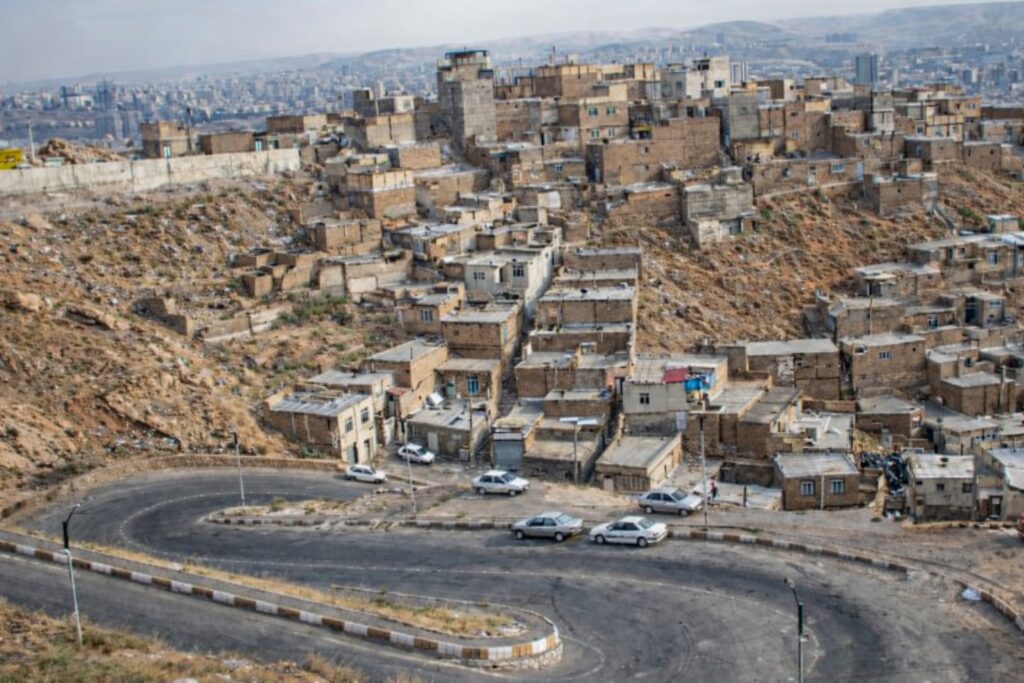
The issue of suburbanization (marginal settlement) in the metropolis of Tabriz is not merely a physical and urban challenge; rather, it stands as one of the most complex strategic knots within the political and social geography of Southern Azerbaijan. Tabriz, as the economic and cultural hub of the region, is today grappling with a phenomenon that has placed nearly half of its population in a condition of existential suspension and structural instability. This report, adopting a sociological and strategic approach, undertakes an in-depth analysis of the roots of this phenomenon, the dimensions of seismic vulnerability risks, and an assessment of the effectiveness of government policies in addressing this crisis.
1. Historical and Sociological Genealogy of Informal Settlement in Tabriz
The phenomenon of suburbanization in Tabriz is the product of an accumulative and historical process rooted in structural transformations of Iran’s macro-economy. In the 1950s (1330s SH), concurrent with the onset of the first waves of urban modernization and administrative centralization, the initial sparks of rural-to-urban migration were ignited. However, the turning point of this transformation was the implementation of land reforms in the 1960s (1340s SH), which, through the collapse of the traditional landlord–peasant system and the failure to replace it with modern productive models, drove vast masses of rural populations toward industrial hubs such as Tabriz in search of survival.
During this period, due to its transit position and the establishment of heavy industries, Tabriz became a magnet for attracting cheap labor. Yet, because the city’s formal structure lacked the capacity and planning required to absorb this population, migrants spontaneously settled on surrounding lands—particularly in the northern and southern zones characterized by difficult topography and lower land value. Following the 1979 Revolution and during the Iran–Iraq War, owing to the halt of effective investments in the housing sector and the emergence of successive inflations, not only rural populations but also segments of the lower-middle urban class were pushed toward inefficient and marginal urban fabrics due to their inability to afford formal housing.
Sociological analyses indicate that suburbanization in Tabriz is not merely a physical problem; rather, it represents the spatial manifestation of “urban poverty” and “distorted development.” These areas—referred to in academic literature as “rural-urban hybrids” or “village-like urban settlements”—have produced spaces in which traditional rural ties intertwine with modern urban pressures, resulting in the formation of an informal lifeworld.
2. Statistical Anatomy and the Geography of Inequality
Official data reveal alarming dimensions of the housing crisis in Tabriz. This metropolis, once known as the “City of Firsts,” now faces statistics indicating that more than one-third to nearly half of its population resides in inefficient urban fabrics.
Physical and Demographic Indicators of Tabriz
- Population living in deteriorated and inefficient urban areas: over 693,000 people
- Population living in informal settlements (slums): 400,000 – 500,000 people
- Total population living in poor housing conditions: 900,000 – 1,000,000 people
- Officially designated deteriorated urban area: 25 km² (second largest in the country)
- Informal settlement area: 20 km²
- Number of residential plots under 100 m²: 96,000
- Number of residential plots under 50 m²: 20,000
According to analyses by Iran’s Ministry of Roads and Urban Development, the total area of inefficient urban fabrics in Tabriz (including worn-out fabrics and informal settlements) exceeds 3,300 hectares. Population density in these areas is so high that more than 55 percent of the province’s urban population is concentrated in Tabriz, with a large portion living under conditions where public service per capita levels are at their minimum. In some marginalized neighborhoods, households of six members live in spaces as small as 12 square meters, making any form of spatial separation and adherence to hygienic and private boundaries practically impossible.
Geographical Distribution of Target Neighborhoods
The main concentration of suburbanization in Tabriz can be traced to two northern and southern fronts. The northern zone of the city (south of the Pasdaran Highway), with a population exceeding 250,000, is considered the densest and most hazardous marginalized area of Tabriz. Target neighborhoods for regeneration based on deprivation indices include:
- North of the city: Khalilabad, Ahmadabad, Silab-e Mollazeynal, Silab-e Qushkhaneh, Tarlan-Daresi, Yusefabad, Idelu.
- South and southwest: Akhmaqaya, Taleqani, Maralan, Laleh, Ghazandagi, and Hafez.
- Central worn-out fabrics: Koshtargah, Manba‘, and parts of Abbasi.
3. Strategic Analysis of Distorted Development and Economic Imbalance
From a strategic perspective, Tabriz holds the central position of Southern Azerbaijan—a city at the crossroads of cultures and a communication gateway between Iran, Europe, and Russia. Nevertheless, economic analyses reveal a “development paradox” in this region. While Tabriz has the potential to become a hub similar to Istanbul, the share of East Azerbaijan Province in the national GDP has declined in recent years to approximately 3.37 percent.
Migration and the Phenomenon of “Elite Drain”
One of the alarming indicators in official documents is the phenomenon of “negative migration” from the province. Tabriz and East Azerbaijan are currently considered “out-migration” regions toward the center (Tehran). This reflects a fundamental flaw in the logic of spatial planning. While elite and capital populations leave Tabriz, the city faces an influx of rural migrants and residents of smaller towns who, due to lack of facilities at their origin, seek refuge in the margins of Tabriz. Over five years, 230,000 people have been added to the province’s urban population, with the rural-to-urban migration rate being four times the national average.
Industrial Centralization and Peripheral Poverty
More than 80 percent of the province’s industries are concentrated along three main corridors (Tabriz–Marand, Tabriz–Mianeh, and Tabriz–Maragheh). This imbalance has resulted in the extraction of economic surplus from peripheral areas and its accumulation in the provincial center without providing the necessary infrastructure to absorb the population. This process has weakened the internal potentials of other counties and turned Tabriz into a reservoir for the overflow of poverty.
4. The North Tabriz Fault: The Coexistence of Poverty and Seismic Catastrophe
The most serious strategic threat to the metropolis of Tabriz is the geographical overlap of marginalized neighborhoods with the trajectory of the active North Tabriz Fault. This fault—one of Iran’s most seismically active tectonic structures—passes directly through densely populated neighborhoods such as Tarlan-Darresi, Silab, and Idehlu.
Potential Earthquake Scenario
The North Tabriz Fault has a long history of destructive earthquakes. The 1721 and 1780 earthquakes completely devastated Tabriz. Paleoseismological studies indicate that this fault, with an approximate recurrence interval of 645 years, currently has the potential to generate an earthquake of about Mw ≈ 7.7.
The risk in these areas is twofold: on the one hand, buildings are constructed with cheap and substandard materials; on the other, steep topography and narrow streets make emergency response virtually impossible. Experts warn that if the fault is reactivated, these neighborhoods would turn into rubble within minutes, and the death toll could reach hundreds of thousands.
5. Reassessment of Urban Regeneration Policies and Government Interventions
Various governments have devised multiple plans for empowering and relocating marginalized populations, yet the gap between policymaking and implementation has consistently prevented the achievement of objectives. The first comprehensive plan of Tabriz (1969) and the second comprehensive plan (1996) effectively failed in confronting informal settlement.
Tabriz Rescue Plan (45-Meter Enghelab Project)
This project, one of the most prominent urban regeneration initiatives in the country, aims to open a strategic corridor through the heart of the densest marginalized area in northern Tabriz.
- Objective: Connecting Enghelab Street to Pasdaran Highway and facilitating mobility in underprivileged neighborhoods.
- Specifications: Length of 1,800 meters and width of 45 meters.
- Financial challenges: According to the Mayor of Tabriz, 1,000 billion tomans were to be provided by the General Directorate of Roads and Urban Development, but so far the municipality has borne the heavy acquisition costs alone. By mid-1403 SH, approximately 10,000 billion rials had been spent solely on acquiring 750 parcels along this route.
Relocation Project: Javanan Township
Since 88 hectares of marginalized fabrics lie in landslide-prone areas and directly on the fault line, relocating them to safe locations is the only rational solution. Javanan Township, with an area of about 135 hectares, has been designated for this purpose.
- Capacity: Construction of 7,000 residential units, of which 1,500 units are allocated to the municipality.
- Status in 1403 SH: Construction of 1,200 residential units is ongoing, with varying physical progress (80 percent in Phase I and 20 percent in Phase II).
- Strategic obstacles: Completion of this township requires coordination among utility service agencies (electricity, gas, water), which currently constitutes a managerial bottleneck.
6. Sociological Analysis: Social Capital within Informality
Contrary to traditional views that regard marginalized areas as centers of crime and deviance, academic studies in Tabriz demonstrate the existence of intrinsic social potentials. Research on northern neighborhoods indicates that “place attachment” and “social trust” among residents have the highest impact coefficients in sustainable urban regeneration.
Social Capital and Resilience
Path analysis results show that membership in local institutions and mutual trust can act as drivers of regeneration. However, suburbanization—by reducing quality of life—has slowed political and social development. Urban housing poverty in Tabriz has deep social dimensions, in which “housing shortage” and “room occupancy density” carry the greatest weight in reproducing poverty.
Identity and Culture-Based Regeneration
Given the adjacency of these areas to historical fabrics (such as the Maralan neighborhood and proximity to Rab‘-e Rashidi), a “culture-based regeneration” approach is proposed as a strategic pathway. Instead of demolition, this approach emphasizes branding local cultural–artistic products and preserving historical identity, which can lead to sustainable livelihoods and reduce residents’ sense of exclusion.
7. Managerial Problems and Institutional Conflicts
An analysis of urban regeneration trends in Tabriz reveals a serious “managerial disconnect” between municipal authorities and central government institutions. Tabriz Municipality, as the main implementing body, has repeatedly complained that the state budgets allocated to it on an annual basis are not actually disbursed.
This institutional deadlock manifests itself in several areas. The Ministry of Roads and Urban Development fails to release the funds approved under the “Rescue Plan” and delays the allocation of substitute land for years. Tabriz Municipality, in turn, is unable to move projects forward due to the heavy financial burden of land acquisition and its inability to independently finance major infrastructure investments. Utility agencies responsible for electricity, gas, and water services delay the extension of networks to new areas, particularly to projects such as the Javanan New Township. Meanwhile, the Supreme Council of Urban Planning operates an extremely slow and cumbersome bureaucracy in approving land-use changes and detailed development plans.
These inter-institutional conflicts have caused even projects such as the Javanan Township, despite having received approval from the Supreme Council of Urban Planning, to be delayed for years. Strategically, this inefficiency has led to the erosion of social capital and a serious decline in public trust in urban regeneration promises.
8. Foresight Analysis and Security–Social Risks
If the current trend of suburbanization in Tabriz is not contained, by the horizon of 1405 SH the city will face crises that transcend urban management:
- Passive defense crisis: Concentration of strategic industries (refinery and petrochemical complexes) near areas that would collapse entirely in an earthquake significantly increases security and economic risks.
- Severe urban polarization: The deep divide between affluent areas and impoverished margins will provide fertile ground for social protests and reduce political resilience in the metropolis of Tabriz.
- Environmental degradation: Illegal urban expansion toward the Aoun ibn Ali heights and destruction of surrounding rangelands will lead to urban flooding and slope failures.
9. Conclusion and Strategic Recommendations for the Research Center
The issue of suburbanization in Tabriz is not a physical problem but a “multidimensional crisis” that threatens the strategic vitality of Southern Azerbaijan. Based on this examination, the following strategic recommendations are proposed:
- Reforming the logic of spatial planning: The government must reduce the attractiveness of migration to Tabriz by equitably distributing facilities across the province and focusing on developing the internal capacities of deprived counties.
- Establishing a National Tabriz Regeneration Consortium: Resolving the crisis of 400,000 marginalized residents exceeds the capacity of the municipality. A supra-institutional structure with direct participation of the three branches of power is needed to accelerate acquisition and relocation from high-risk zones.
- Titling and cognitive empowerment: The movement to formalize property titles (in non-high-risk areas) should be pursued as a tool for public participation and enhancement of social capital.
- Prioritizing rapid safe housing: Given the imminent fault risk, completion of Javanan Township and similar projects should be treated as “national defense plans” and exempted from ordinary administrative bureaucracy.
- Community-centered and culture-based approach: Regeneration programs should move beyond purely engineering perspectives and be grounded in livelihood enhancement, education, and preservation of local identity to ensure social sustainability.
Tabriz stands on the threshold of a major decision: either it will advance toward renewal and relocation with strategic resolve, or—if negligence continues—it will record in its history a human and national catastrophe of irreparable dimensions.