A REASSESSMENT OF THE REPUBLIC OF AZERBAIJAN’S PUBLIC DIPLOMACY STRUCTURE IN IRAN

The geopolitical developments in the South Caucasus following the Second Karabakh War in 2020 and the new regional configurations between 2024 and 2026 have established the Republic of Azerbaijan as a pivotal actor in the regional security system. However, despite Baku’s military and diplomatic advancements, its public diplomacy when engaging with non-Azerbaijani segments of Iranian society has consistently faced fundamental challenges. This policy paper, with a strategic and impartial perspective, analyzes the roots of Baku’s failure to penetrate various layers of Iranian society and, by identifying latent potentials, outlines a roadmap for transitioning from confrontation to positive influence. Analyses indicate that despite possessing soft power assets such as a secular development model, modern urban infrastructure, and shared intellectual heritage, Baku has been unable to become an attractive soft power for the general Iranian public due to its reliance on ethno-centric approaches.
DONALD TRUMP’S NARCISSISM AND STRATEGY TOWARDS THE ISLAMIC REPUBLIC OF IRAN
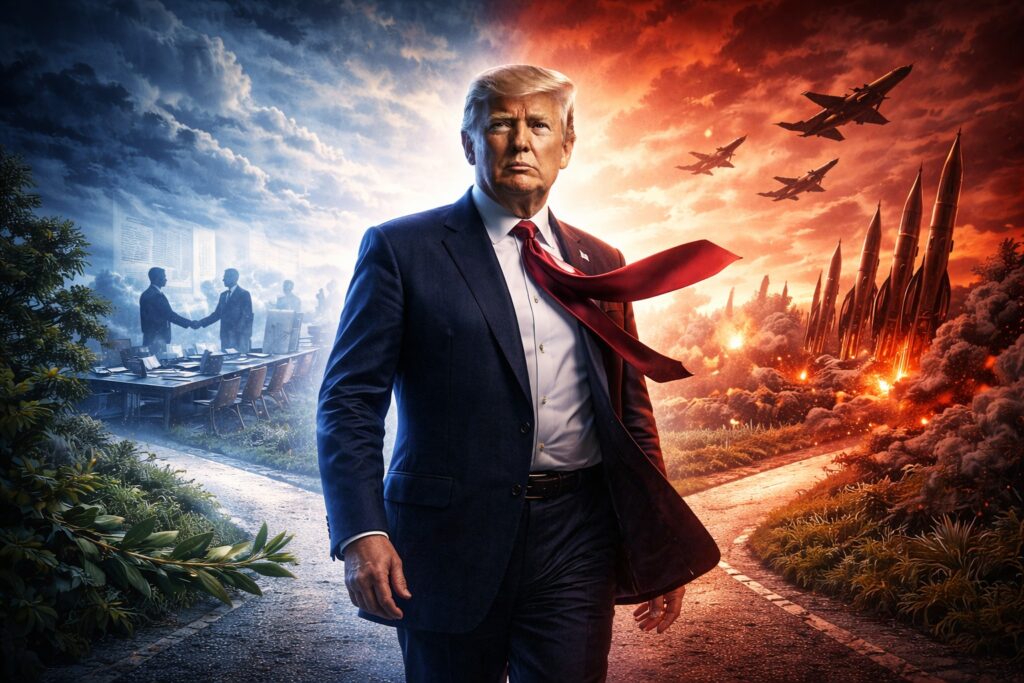
Analyzing Donald Trump’s behavioral patterns and discourse towards the Islamic Republic of Iran requires a deep exploration of the underlying layers of his personality and its connection to his lessons learned in the business world, in order to answer whether his actions are the product of conscious strategic planning or merely stemming from psychological impulses. The reality is that in Trump’s intellectual framework, the distinction between personality and strategy has practically disappeared; in other words, he employs his inherent characteristics as a tool to advance political goals. This approach, known in political literature as the “madman theory,” rests on the assumption that if a leader can convince his enemies that he is unpredictable, reckless, and even willing to take extreme actions, the opposing side will concede more advantages for fear of uncontrollable consequences. By leveraging this theory, Trump creates a strategic ambiguity around his decisions, keeping both enemies and even allies in a state of perpetual uncertainty. However, psychological analysts believe this behavior is not merely a strategic mask but is rooted in “Narcissistic Personality Disorder” (NPD), characterized by an excessive need for admiration, extreme sensitivity to criticism, and a tendency to divide the world into absolute poles of friend and enemy. These personality traits have led him to define Iran within a stereotypical and simplistic framework as the “bad actor” and “absolute threat,” an approach that sacrifices geopolitical complexities for simple, black-and-white answers.