Dr. Yusef Rahimli
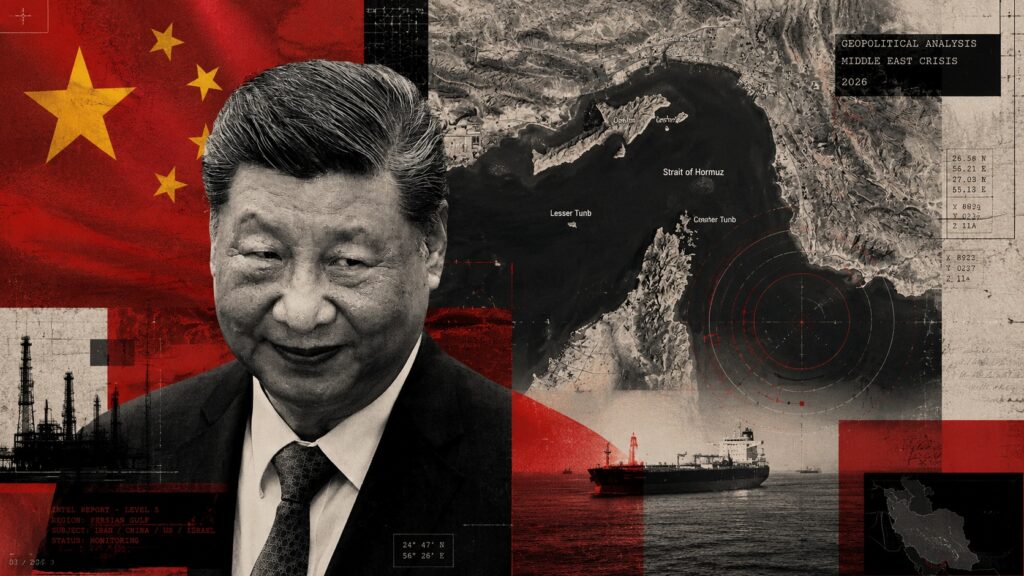
Military developments in the Middle East, initiated by an operation referred to as “Operation Epic Fury” carried out by the United States and Israeli forces against Iran’s nuclear and military infrastructure, have ushered the global geopolitical order into a new phase of instability. In this context, the People’s Republic of China, the world’s largest energy importer and Washington’s primary strategic rival finds itself in a complex and multidimensional position, oscillating between the necessity of safeguarding energy security, protecting its core interests in Taiwan, and attempting to redefine the international order within the framework of the “Global Security Initiative” (GSI). By the end of March 2026, Beijing’s strategy toward this war has evolved from a meaningful initial silence to an active yet non-interventionist diplomacy, with the ultimate aim of capitalizing on the erosion of U.S. power in the region and strengthening Tehran’s strategic dependence on Beijing in the long term.
Beijing’s Response: From Tactical Silence to Diplomatic Condemnation
China’s initial reaction to the attacks of February 28, 2026, which led to the assassination of senior Iranian officials, including the leader of the Islamic Republic was marked by a notable delay. During the first 48 hours of the conflict, China’s Ministry of Foreign Affairs followed an entirely routine approach and refrained from direct commentary on the extent of the attacks. This initial silence reflected a careful assessment of the balance of power and possibly the existence of behind-the-scenes understandings between Beijing and Washington. Analyses by think tanks such as Chatham House indicate that at this stage China sought to gauge the resilience of Iran’s political system and assess regional reactions, in order to avoid any premature intervention that might increase its strategic costs.
As time passed and the broader dimensions of the war became clear, China’s position shifted toward a verbal but calculated condemnation. Chinese Foreign Minister Wang Yi, using strong language, described the attacks as a “return to the law of the jungle,” yet refrained from directly naming the United States or Israel as the aggressors in initial official statements. This dual approach reflects Beijing’s effort to maintain its prestige as the informal leader of the Global South while simultaneously avoiding direct confrontation with the Trump administration on the eve of sensitive diplomatic engagements.
To understand China’s position, one must analyze the hierarchy of its national interests in relation to this crisis. At the top of these priorities stands the Taiwan issue as a “vital red line”; evidence suggests that Beijing has used the Iran crisis to extract concessions from the United States in East Asia, such as delaying advanced arms sales to Taipei. In second place is energy security, which China manages through rapid diversification of sources and reliance on its strategic reserves. At the regional level, China’s priority is to preserve economic interests linked to the Belt and Road Initiative through diplomatic mediation aimed at maintaining infrastructure stability. Finally, in the long-term horizon, Beijing seeks to undermine the moral legitimacy of the West and promote the “Global Security Initiative” as an alternative governance model for de-hegemonizing the international order.
Energy Geopolitics and China’s Economic Resilience
The most immediate challenge facing China in March 2026 was the closure of the Strait of Hormuz and the surge in oil prices to over $120 per barrel. Iran, which in 2025 supplied more than 10 percent of China’s total oil imports, sharply reduced its production and exports with the onset of the war. The Strait of Hormuz, through which 40 percent of China’s imported oil passes, became a theater of mine-laying and drone attacks, severely threatening the security of China’s industrial supply chains.
However, unlike in past decades, China was better prepared for this shock. Relying on a strategy of approximately 85 percent self-sufficiency in its overall energy mix and increasing the share of coal and renewable energy, Beijing managed the initial pressure. In addition, China’s strategic oil reserves, which peaked in late 2025, allowed it to withstand a complete cutoff of Gulf exports for up to four months without resorting to military intervention to reopen shipping routes.
The 2026 war prompted Beijing to turn toward other strategic partners to secure its energy supply. Russia played a key role by increasing the capacity of the “Power of Siberia 2” pipeline, creating a secure land route that reduced dependence on risky maritime pathways. In North Africa, Algeria emerged as a vital partner, where Sinopec, in cooperation with Sonatrach, launched joint exploration and production projects to establish energy supply bases outside U.S. influence in Hormuz.
In this context, Morocco became a hub for the aggregation of the electric vehicle battery value chain and green hydrogen for China’s future projects. Egypt, through an $18 billion agreement signed in early 2026 to develop the Benban solar park and wind projects, solidified its position as a logistics and clean energy production hub in China’s African strategy. At the same time, Beijing, through diplomatic coordination with Saudi Arabia, sought to ensure the safe flow of oil via alternative pipelines leading to the port of Yanbu on the Red Sea. This reconfiguration indicates China’s shift toward parallel systems focused on land routes and partners outside the conflict zone.
“Gray” Military Support and Intelligence Sharing
Although China has refrained from direct military intervention in favor of Iran, intelligence analyses point to deep cooperation at hidden and technical levels. By providing dual-use technologies to Iran, Beijing has played a significant role in rebuilding Tehran’s drone and missile capabilities. Throughout March 2026, reports emerged of the transfer of sensitive electronic components, inertial sensors, and satellite navigation modules to Iran through Chinese intermediaries in Hong Kong and the United Arab Emirates, enabling Tehran to increase the accuracy of its retaliatory strikes against U.S. bases.
One of the key dimensions of China’s support has been the sharing of satellite data and granting Iran access to the BeiDou navigation system. This access enabled Iranian forces to guide their missile operations under conditions where GPS systems had been disrupted by U.S. forces. Furthermore, the deployment of Chinese intelligence and research vessels in the Gulf of Oman and the Indian Ocean in early March 2026 enhanced Iran’s surveillance capabilities. Equipped with advanced radar systems (including YLC-8B radars), these vessels detected the electronic signatures of F-35 stealth fighters and U.S. bombers and transmitted this data to Iran’s defense networks within the framework of strategic cooperation.
For the Chinese military, the Iran war represents a unique laboratory for studying U.S. military doctrine in the 21st century. Chinese military experts are closely monitoring the performance of THAAD and Patriot defense systems against Iran’s saturation attacks of ballistic missiles. Analysts in Beijing’s defense think tanks believe that if U.S. defense systems fail against Iranian missiles, this would imply that Taiwan’s missile defense against large-scale Chinese attacks would “turn into scrap metal.” These field data are directly utilized in PLA planning for a potential conflict scenario in 2027 (the Davidson window).
Mediation Diplomacy and Narrative Competition
While Washington and Tel Aviv were engaged in military operations, Beijing sought to present itself as the sole “voice of reason” and “angel of peace” in the region. The dispatch of China’s special envoy to the Middle East, Zhai Jun, in the first week of March was an attempt to fill the diplomatic vacuum. China’s diplomacy was pursued on three levels:
• Regional level (GCC): China held intensive meetings with officials from Saudi Arabia and the United Arab Emirates, attempting to prevent these countries from directly entering the war. By emphasizing that “the sovereignty and territorial integrity of Gulf countries are China’s red line,” Beijing pressured Iran to refrain from targeting oil tankers and the infrastructure of Arab states in order to prevent the expansion of the conflict.
• International level (UNSC): At the United Nations Security Council, China, together with Russia, blocked the adoption of resolutions aimed at legitimizing unilateral U.S. attacks. China’s representative, Fu Cong, emphasized that “power does not mean legitimacy” and used his influence to undermine the legal legitimacy of “Operation Epic Fury.”
• Public level (Global South): Through media outlets such as CGTN, China promoted a narrative portraying the United States as the “primary source of global instability” and a “violator of religious sanctities” (following the assassination of Iran’s leader). This narrative was particularly well received among Islamic and African countries weary of Western double standards.
The 2026 war provided a golden opportunity to promote Xi Jinping’s “Global Security Initiative.” Beijing argues that, unlike the Western model based on “military alliances” and “unilateral security,” the Chinese model emphasizes “indivisible security” and the “resolution of disputes through dialogue.” Although this approach has in practice been accompanied by technical support for Iran, at the discursive level it has succeeded in positioning China as a “stable and predictable” power in contrast to an “unreliable and unstable” United States.
Impact of the War on China’s Relations with Iran and Israel
As of March 2026, China-Iran relations have entered a phase of asymmetric dependence. Although the 25-year agreement remains in force, Beijing is using the weakness caused by the war to impose its economic terms on Tehran. Iran, now facing a regime survival crisis, is more dependent than ever on China’s political and economic support. Analysts believe that Beijing fears the complete collapse of the Iranian regime, as this would bring to power a pro-Western government along China’s energy corridors; however, a “weakened and dependent” Iran that serves as a buffer against U.S. influence is precisely what Beijing seeks.
On the other hand, China-Israel relations have fallen to their lowest level in recent decades. China’s explicit condemnation of Israeli attacks and its support for Palestinian rights amid the war have led to a cooling of diplomatic relations. Nevertheless, China still hopes to rebuild its influence in Tel Aviv through participation in post-war reconstruction efforts.
Strategic Outlook and Long-Term Implications
By the end of March 2026, several key conclusions can be drawn regarding China’s role in this conflict:
- “Winning through waiting” strategy: China has demonstrated that in the face of major crises, it prefers to wait for the erosion of its rivals rather than engage actively. The consumption of advanced U.S. weapons stockpiles (such as Tomahawk missiles and Patriot interceptors) in the Middle East directly benefits China in any potential conflict over Taiwan, as rebuilding these stockpiles will take years.
- Consolidation of the Moscow–Beijing–Tehran axis: The 2026 war has strengthened technical and intelligence cooperation among these three powers. Although not a formal military alliance, this axis has evolved into a coherent bloc in countering sanctions and building joint defensive capabilities against the West.
- Acceleration of a new financial and energy order: The closure of the Strait of Hormuz and new financial sanctions against Iran have reinforced China’s determination to establish non-dollar payment systems and alternative trade routes (including North-South corridors and Central Asian land routes).
- Uncertainty over the fate of previous mediations: The failure of the 2023 Iran-Saudi Arabia agreement brokered by China demonstrated that without a “security umbrella” and military presence, China’s political influence is highly limited during full-scale wars. This will serve as an important lesson for Beijing in strengthening its military presence in ports such as Gwadar and Djibouti within its fifteenth five-year plan.
In conclusion, China, in the war between Iran, the United States, and Israel, is playing the role of a “crisis manager” whose objective is not an absolute victory for Iran, but rather to prevent its catastrophic defeat while simultaneously maximizing the benefits of U.S. military focus in the Middle East to advance its objectives in East Asia. As long as the flames of war continue in the Gulf, Beijing calmly observes the weaknesses of the American “eagle” in order to deliver a decisive blow in Taiwan at the appropriate moment.
Finally, a deep analysis of China’s positions up to the end of March 2026 shows that, on the one hand, it seeks to maintain its position in the Global South through verbal condemnation of the attacks and limited technical support for Iran, and on the other hand, by avoiding direct confrontation, it is preserving its economic stability and military readiness for future conflicts. Beijing has skillfully transformed the threat of energy disruption into an opportunity to restructure its supply chains in North Africa and Russia. In this bloody chessboard, China is a piece that has gained the maximum amount of intelligence data and geopolitical advantages at minimal cost, while its Western rivals are sinking into a quagmire that Beijing watches from afar.