Hamit Melikoğlu
Introduction
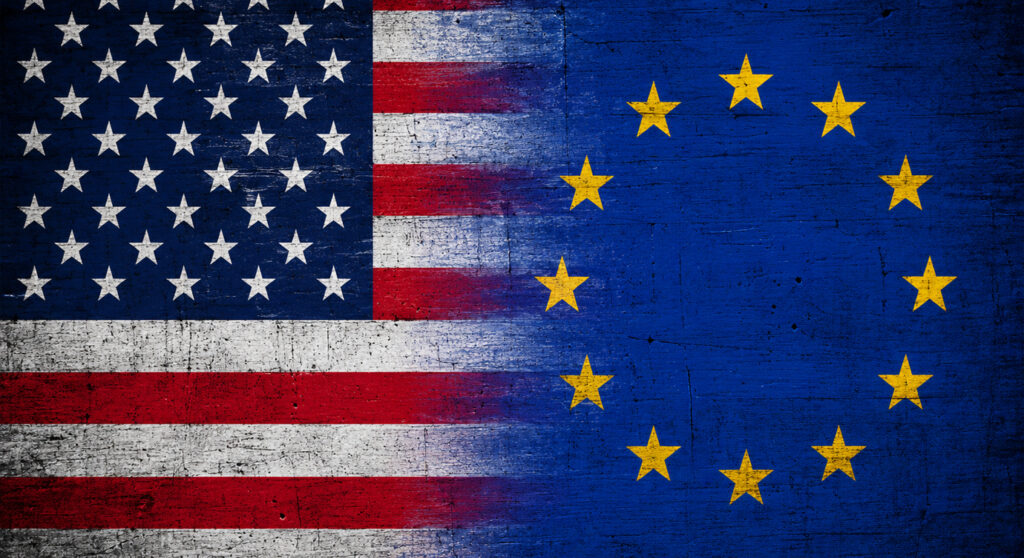
Geopolitical developments in the Middle East in 2026, particularly the rising tensions surrounding Iran and the disruptions to maritime transport in the Strait of Hormuz, have brought one of the most significant fractures within the Western world back into view: the transatlantic divergence between the United States and the European Union. Although these two actors have generally adopted a common stance on many security issues within the framework of their traditional alliance, significant differences in approach, instruments, and priorities regarding Iran are emerging.
The Iranian issue, especially concerning its nuclear program and regional role, holds strategic importance for both sides. However, what distinguishes this issue in 2026 is not merely the nature of the threat but also the form of response to it. The United States, particularly within the framework of its “maximum pressure” policy, aims to rapidly and decisively constrain Iran through a combination of economic and military instruments. In contrast, the European Union emphasizes the continuation of diplomacy, negotiation, and the gradual management of the crisis, avoiding an escalation of tension that could entail direct economic and security costs for the continent.
This difference in approach raises the central question of this article: Why do the United States and the European Union diverge so significantly in their methods of achieving their shared goal of preventing Iran from acquiring nuclear weapons? Is this difference merely tactical, or is it rooted in deeper factors such as the structure of the international system, economic dependencies, and strategic culture?
The main hypothesis of this article is that the transatlantic divergence over Iran results from a combination of three main factors: first, differing assessments regarding the timing and urgency of the threat; second, differences in levels of economic vulnerability, particularly in the energy sector; and third, the differing positions of the United States and Europe in great power competition. Within this framework, the article aims to demonstrate that the disagreement between the US and Europe is not a temporary discord but a reflection of structural differences in their understandings of security and international politics.
Historical Background
To understand the transatlantic divergence towards Iran in 2026, it is necessary to examine the transformation process of Western policies towards this country over the past two decades. This process can be summarized in three main stages: the period of active diplomacy (the Nuclear Agreement/JCPOA), the period of maximum pressure, and finally, the transition towards military conflict and an energy crisis.
The first turning point was the nuclear agreement signed in 2015 during Barack Obama’s presidency, known as the JCPOA. This agreement was the result of years of negotiations between Iran and global powers (IAEA, 2025). Its primary aim was to limit Iran’s nuclear program in exchange for the gradual lifting of sanctions. Within this framework, the core logic of Western policy, particularly from the European perspective, was based on the concept of “containment through diplomacy.” Europe viewed this agreement as a successful example of multilateralism and the effectiveness of international institutions in resolving a complex crisis.
However, with Donald Trump’s assumption of office in 2017, this approach underwent a radical change. The US unilateral withdrawal from the agreement in 2018 and the re-imposition of comprehensive sanctions on Iran marked the beginning of a new era called “maximum pressure.” At this stage, Washington argued that the JCPOA was insufficient to change Iran’s regional behavior and that its restrictions were temporary. Consequently, the US goal evolved from “managing the crisis” to “changing Iran’s behavior or structurally weakening it.” In response, European countries attempted to preserve the agreement and prevent the complete collapse of the diplomatic framework, but in practice, they had limited capacity to counter US economic pressure.
The third stage constituted the path leading to the 2026 crisis. This period emerged as a result of accumulated disagreements and escalating tensions. At this stage, the United States and Israel carried out military strikes on infrastructure linked to Iran’s nuclear and missile capabilities (Reuters, 2026). Iran’s retaliation, particularly the disruptions in the Strait of Hormuz, had severe and direct effects on global energy markets. These developments represented a major economic shock for Europe, which is highly dependent on energy imports, creating direct pressure on inflation, economic growth, and market stability (Pacheco, 2026).
Under these conditions, the divergence between the United States and Europe became more apparent. While the US viewed these steps as part of a strategy to rapidly constrain the Iranian threat, Europe was both economically damaged and interpreted this approach as a factor increasing regional instability.
Difference in Threat Perception
One of the most fundamental reasons for the transatlantic divergence over Iran is the difference in perception regarding the nature, timing, and severity of the threat. The United States and the European Union agree that Iran acquiring nuclear weapons would have serious consequences for regional and international security. However, there are significant disagreements regarding the “urgency” of this threat and how to respond to it.
In the US approach, particularly within the framework of security policies based on preventive deterrence, Iran’s nuclear program is assessed as an “immediate threat approaching a critical threshold.” The key concept here is “nuclear breakout time,” referring to the period required for a country to obtain the fissile material necessary to produce a nuclear weapon from its current enrichment level. A shortening of this time means, for Washington, an increased likelihood of a sudden and difficult-to-control change in the balance of power. Therefore, US decision-makers believe that if decisive intervention does not occur before the critical threshold is reached, containing Iran in the future will be much more difficult and costly.
In contrast, the European Union assesses the threat within a different framework. From the European perspective, even if Iran approaches the nuclear threshold, it is possible to manage the situation through international verification mechanisms, diplomatic pressure, and deterrence instruments. Historical experience, especially processes involving other nuclear powers, shows that acquiring nuclear capability does not always mean direct use or the collapse of the international order. Hence, Europe tends to view the threat as “manageable” and does not consider it a crisis requiring immediate military intervention.
This perceptual difference also manifests in the interpretation of the concept of “risk.” For the United States, the primary risk is “failing to act in time.” For Europe, the main risk is “the escalation of the crisis by a hasty intervention.” In other words, while the US focuses more on future potential consequences, Europe prioritizes current costs and short-term instability.
The Role of Economy and Energy
One of the most important variables determining the transatlantic divergence is the difference in economic vulnerability. The Middle East, and particularly the Strait of Hormuz, as one of the world’s most critical energy transit points, plays a vital role for Europe’s economic security. A significant portion of the oil and natural gas needed by European economies depends directly or through global markets on this route. Therefore, any disruption on this transit line directly leads to higher energy prices, increased inflation, and slower economic growth.
In the 2026 crisis, the halting or restriction of transits through the Strait of Hormuz created a multi-layered shock effect on the European economy. First, oil and natural gas prices rose sharply, directly increasing production and transportation costs (Bloomberg, 2026). Second, the increase in energy prices fueled inflation and created pressure on households and monetary policies. Third, uncertainty in energy markets and disruptions in supply chains negatively impacted investment and economic growth. Estimates indicate that these developments led to a significant decline in growth rates in Europe in 2026 and caused tens of billions of dollars in production losses.
In contrast, the United States, thanks to the structural transformation in its energy market, particularly the increase in shale oil and gas production, is much less dependent on energy imports originating from the Persian Gulf (Ip, 2026). This relative energy independence has made the US more resilient to supply shocks in the Strait of Hormuz. Although an increase in global energy prices can also affect the US economy, these effects are more limited and indirect compared to Europe.
This structural difference in energy dependence directly reflects on policy preferences. For Europe, war and instability in the Middle East entail tangible, short-term costs, ranging from rising fuel prices to pressure on industry (Besch, 2026). Therefore, Europe has a stronger motivation to prevent the escalation of conflict and pursue diplomatic solutions. In contrast, the United States, due to lower direct costs, can afford harsher policy options, including military pressure.
Furthermore, Europe’s dependence on global market stability and international trade makes it a more sensitive actor to geopolitical shocks. While the US can partially shield itself from such shocks, Europe must manage these effects in the short term. Thus, the energy economy is not just a background variable but a fundamental factor shaping Europe’s more cautious approach to the Iranian crisis.
Nuclear, Iran, and the Balance of Power
One of the United States’ primary concerns regarding Iran is the strategic impact of Iran’s nuclearization on the balance of power in the Middle East. Within the framework of the realist approach, a regional actor acquiring nuclear weapons could radically alter the distribution of power and directly affect the behavior of other actors.
The first consequence of Iran becoming a nuclear power would be an increase in its strategic deterrence. Possessing nuclear capability would significantly raise the cost of direct military intervention against Iran and enable it to act more securely in the regional environment. From Washington’s perspective, this situation could narrow the military maneuverability of the US and its allies, especially Israel, and lead to a shift in the balance of power to their detriment.
The second significant consequence is the likelihood of Iran adopting a bolder stance in its regional policy. Within the framework of deterrence theories, some analyses suggest that states possessing a nuclear umbrella might act more actively in non-nuclear domains (e.g., support for proxy forces or regional rivalries). This could lead to an increase in proxy wars in areas such as Iraq, Syria, Lebanon, Gaza, and Yemen, and deepen regional instability.
The third, and perhaps most critical, consequence is the potential onset of a nuclear proliferation process in the region. Some Arab countries, particularly Saudi Arabia, might respond by developing their own nuclear programs or seeking security guarantees from major powers. Such a scenario could transform the Middle East from a nuclear-weapon-free zone into a multipolar nuclear environment, increasing the risk of miscalculation, an arms race, and long-term instability.
However, the response of Arab countries to this situation would not be uniform. Three basic behavioral models can be foreseen:
- First, taking steps towards developing independent nuclear or military capabilities.
- Second, increasing security dependence on the United States and demanding deterrence guarantees.
- Third, pursuing a balancing policy aimed at reducing tension with Iran and keeping communication channels open.
In practice, many countries are likely to adopt a combination of these three approaches. The tendency of some Arab countries, particularly US allies, towards a balancing strategy carries the potential to weaken Washington’s influence in the region.
In contrast, while the European Union acknowledges these potential consequences, it makes a different assessment regarding their severity. According to Europe, even if Iran achieves nuclear capability, mutual deterrence mechanisms, nuclear non-proliferation regimes, and diplomatic pressure instruments could prevent the crisis from becoming uncontrollable.
Great Power Competition
To fully understand the United States’ approach towards Iran, it is necessary to analyze this policy within a broader framework, namely the context of great power competition. In recent years, US foreign policy has increasingly been shaped around competition with China and Russia. In this context, the Middle East is viewed not merely as a region where crises are concentrated, but also as an important arena for geopolitical struggle between great powers.
Within this framework, China, as a rising economic actor, has significantly increased its presence in the Middle East. The “Belt and Road Initiative,” infrastructure investments, and increasing energy imports from regional countries have made China a key economic partner for Middle Eastern states. Moreover, its active role in some regional diplomatic processes, such as mediation between Iran and Saudi Arabia, demonstrates Beijing’s effort to convert economic influence into political clout (Reuters, 2026).
In addition to China, Russia has also strengthened its position in the region using military and security instruments. Maintaining its military presence in Syria during the Bashar al-Assad era, preserving relations with this country during the Ahmed al-Sharaa period, continuing its influence on Iran’s political structure, and attempting to play a role in regional security issues make Moscow a significant actor. This has become even more important, especially at a time when the US shows a tendency to reduce its military engagements in the region.
In this context, the primary concern of the US is that if the Iranian crisis is not managed decisively, Washington’s credibility and influence in the region would weaken. If the US cannot ensure the security of its allies or effectively contain Iran, the confidence of regional states, particularly the Gulf countries, in the American security umbrella could diminish. Consequently, these countries might deepen their relations with China to secure economic interests and with Russia for security cooperation. Indeed, these countries’ adoption of a balancing stance in the Russia-Ukraine war and their failure to completely sever ties with Russia is a concrete indicator of this tendency.
From this perspective, US policy towards Iran is not limited merely to responding to a regional threat; it is also part of a broader strategy aimed at preserving the balance of power in the international system and maintaining its hegemonic position. Taking swift and decisive steps against Iran carries a political message not only for security reasons but also for allies and rivals: the US remains a decisive actor on the global stage.
In contrast, the European Union assesses this competition in the Middle Eastern context with lower intensity and urgency. From the European perspective, China is seen primarily as an economic partner, while Russia is addressed more in terms of issues related to the European continent’s security, especially within the framework of Ukraine. Therefore, Europe is less inclined to interpret the Iranian crisis as part of a large-scale geopolitical rivalry. Furthermore, Europe’s relatively limited weight in global power competition leads it to avoid direct power struggles with actors like China.
Consequently, this difference in how the Iranian issue is integrated into the context of great power competition stands out as one of the fundamental factors explaining the transatlantic divergence.
Why is Europe Not as Worried About China as the US?
One significant dimension of the transatlantic divergence is the difference in the level and nature of concern regarding China’s increasing role in the international system, particularly in the Middle East. The United States views China as its primary strategic rival and shapes many of its regional approaches, including policy towards Iran, within the framework of balancing this power. In contrast, the European Union adopts a more complex and multi-layered approach.
First, the mutual economic interdependence between Europe and China is a decisive factor. China is one of the European Union’s largest trading partners, and a significant part of Europe’s industrial supply chains depends on this country. This makes it difficult for Europe to pursue a harsh and directly confrontational policy towards China, as escalating tensions with China could incur direct and high costs for European economies. Therefore, Europe prefers to define China not merely as a threat, but as a “rival-partner.”
Second, the difference in threat perception stands out. For the US, China is a multi-faceted threat with military, economic, and technological dimensions, an actor that challenges Washington’s global hegemonic position. In contrast, Europe sees China primarily as an economic and partially technological rival, not assessing it as an immediate security threat.
Third, and one of the most important factors, are Europe’s structural and military limitations. Unlike the US, the European Union does not possess an integrated defense policy or an independent military intervention capacity on a global scale. This situation makes it difficult for Europe to directly and independently balance China’s influence in regions like the Middle East. In international relations, when competition instruments are limited, an actor is more likely to be framed as a “rival” rather than a “security threat.”
Fourth, Europe’s security priorities are different. The energy crisis, inflation, migration, and instability in the near abroad (especially Eastern Europe and North Africa) are more urgent issues for Europe.
In conclusion, the difference in approach towards China between Europe and the US stems from a combination of economic interdependence, differing threat perceptions, limited competition instruments, and different security priorities.
Difference in Strategic Culture
Beyond material factors like economics and military power, one of the deepest causes of the transatlantic divergence is the difference in strategic culture between the United States and the European Union.
In the US context, strategic culture is traditionally defined by a tendency towards direct, decisive, and hard power-based intervention. Historical experiences spanning from World War II through the Cold War and beyond show that Washington adopts an approach of “solving” crises rather than merely containing them. Within this framework, the use of military instruments is seen as a necessary option in many cases. During Donald Trump’s presidency, this approach sharpened further, emphasizing speed, the demonstration of power, and distrust of lengthy diplomatic processes.
In contrast, Europe’s strategic culture, particularly after World War II, is built on the principles of avoiding military conflict, multilateralism, and the peaceful resolution of disputes. Europe’s direct experience of the devastating consequences of two world wars has directed the continent towards strengthening international institutions, the rule of law, and diplomacy. In this context, the use of military force is generally considered a last resort and only in exceptional circumstances.
This difference is reinforced by institutional structures. The United States is a nation-state with a relatively centralized decision-making structure. The executive branch, especially the president, possesses broad powers in foreign policy and security and can make swift and decisive decisions during crises. Although separation of powers and congressional oversight impose certain limits, Washington’s capacity for rapid action, particularly in the military domain, is high in practice.
In contrast, the European Union has a multi-layered and supranational structure. Decision-making processes require coordination between member states and institutions like the European Council, Commission, and European External Action Service. The requirement for unanimity or broad consensus on many critical decisions in foreign policy and security makes the process inherently slower, more cautious, and consensus-based. Therefore, Europe tends towards gradual, multilateral, and diplomatic instruments rather than rapid, high-risk interventions.
Generally speaking, while institutional centralization in the US enhances “rapid response” capacity, the multi-layered, consensus-based structure in Europe promotes “gradual and sustainable crisis management.” Consequently, this difference in strategic culture not only influences the choice of instruments but also how crises are defined. This distinction constitutes one layer of transatlantic differentiation in the context of the Iranian issue.
Conclusion
The analysis of the transatlantic divergence over Iran shows that the difference between the United States and the European Union stems not from the threat itself, but from how this threat is understood, prioritized, and responded to. Both actors agree on the necessity of preventing Iran from acquiring nuclear weapons; however, the paths they follow diverge due to structural and strategic differences.
First, the United States, with a realist and hard power-based approach, defines the Iranian threat within an urgent and structural framework. According to this perspective, delaying intervention could lead to irreversible changes in the balance of power in the Middle East. The effects of these changes are not limited to the region but are directly linked to global competition with China and Russia. Therefore, the US aims to rapidly and decisively constrain the threat, accepting short-term risks.
In contrast, the European Union, with a more institutionalist approach, focuses on the gradual management of the crisis. From the European perspective, the short-term costs of war, especially the effects on energy, inflation, and economic stability, are of primary importance. Dependence on global energy markets and high vulnerability to geopolitical shocks lead Europe to pursue a more cautious policy. Within this framework, diplomacy, negotiation, and multilateralism stand out as the primary instruments for managing the crisis.
Furthermore, differing approaches to China’s role in the international system deepen this divergence. While the US sees China as its primary strategic rival and shapes its regional policies accordingly, Europe adopts a more balanced and less confrontational stance due to economic interdependence and structural limitations.
Finally, the difference in strategic culture – the US tendency towards rapid and decisive intervention versus Europe’s cautious and gradual management approach – is a defining element of this divergence. Considering all these factors together, it becomes clear that the transatlantic differentiation over Iran is not a temporary situation but a reflection of deeper transformations in the international system and structural differences within the Western alliance. The transatlantic divergence did not emerge with the Iranian issue, but this issue has made that divergence more visible, deeper, and more structural.
Looking to the future, the continuation of this divergence could complicate Western policy coordination on international crises. Especially in an era of intensifying great power competition, the lack of consensus between the US and Europe could make not only the management of the Iranian issue but also the overall stability of the international system more fragile. The Iranian issue has made the transatlantic divergence visible; however, this divergence is not temporary but a phenomenon based on structural foundations, whose intensity may vary across different periods.
Referenses
Besch, S. (2026, April 7). Carnegie Endowment for International Peace. carnegieendowment: https://carnegieendowment.org/emissary/2026/04/europe-iran-war-diplomacy-united-states adresinden alındı
Bloomberg. (2026, April 17). Bloomberg: https://www.bloomberg.com/news/newsletters/2026-04-17/iran-opens-hormuz-strait-completely-during-ceasefire-period adresinden alındı
IAEA. (2025). Verification and monitoring in the Islamic Republic of Iran in light of United Nations Security Council resolution 2231 (2015). IAEA.
Ip, G. (2026, April 4). WSJ. WSJ: https://www.wsj.com/economy/the-iran-war-is-making-the-american-economy-more-dominant-than-ever-287f9569 adresinden alındı
Pacheco, M. (2026 , March 31). Euronews. Euronews: https://www.euronews.com/my-europe/2026/03/31/strait-of-hormuz-shutdown-what-implications-for-europe-for-how-long-and-how-high-can-price adresinden alındı
Reuters. (2026, March 4). Reuters: https://www.reuters.com/world/china/china-send-envoy-middle-east-mediation-foreign-minister-says-2026-03-04/ adresinden alındı
Reuters. (2026, February 28). Reuters. Reuters: https://www.reuters.com/world/middle-east/israel-says-it-launched-pre-emptive-attack-against-iran-2026-02-28/ adresinden alındı