“IDENTITY AND RESISTANCE”: BOOK FOCUSING ON THE SOUTH AZERBAIJAN NATIONAL MOVEMENT PUBLISHED
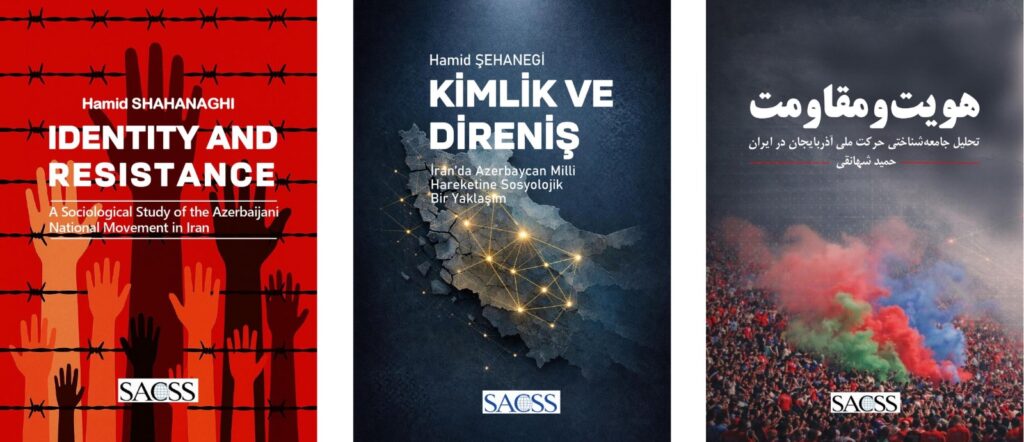
The book “Identity and Resistance: A Sociological Approach to the Azerbaijani National Movement in Iran” has been published with an analytical and interdisciplinary approach; the work examines nation-building policies, assimilation, and the civil resistance models of the Azerbaijani Turks in Iran.
This work analyzes the reaction and organization forms of marginalized identities, focusing on the centralized state structure, identity assimilation policies, and nation-building processes.
The book presents a sociological analysis of the South Azerbaijan national movement and particularly focuses on the civil resistance models of Azerbaijani Turks against the homogenization policies of the Islamic Republic of Iran. The author examines the dynamics of this movement within the broader framework of ethnic resistance and collective identity formation, utilizing field data, historical documents, discourse analysis, and his own decades of lived experience.
STRATEGIC AND CONTENT ANALYSIS OF THE “TBA TV” MEDIA NETWORK

This analytical report has been prepared and compiled by the South Azerbaijan Center for Strategic Studies (SACSS) with the aim of examining diaspora media and their impact on regional geopolitical equations.
The emergence and continued activity of diaspora media on digital platforms, especially in regions marked by geopolitical and ethnic tensions is a phenomenon that requires in-depth analysis from the perspectives of communication sciences and security studies. The TBA TV network, operating on YouTube under the handles @TBATV and @TBATVaz, represents a prominent example of media that define their mission beyond mere information dissemination and function as active agents in redefining national identity and steering political movements. By focusing on Azerbaijanis worldwide, and particularly on the issue of South Azerbaijan, this network seeks to build a bridge between domestic demands and international pressures through the expertise of diaspora elites. This report provides a comprehensive examination of the channel’s structural, content-based, theoretical, and user-interaction dimensions in order to clarify its role in representing regional crises and influencing public opinion.