THE HIDDEN CONSEQUENCES OF AN IRAN–U.S. WAR FOR IRAN, TURKEY, AND GLOBAL ENERGY
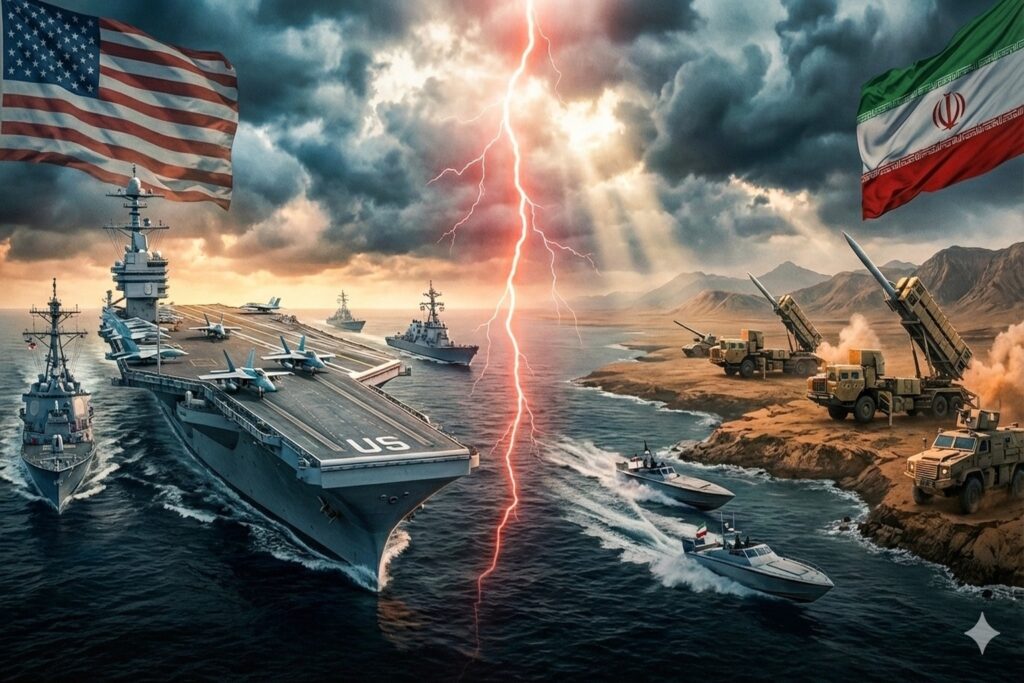
The economic consequences of a full-scale military confrontation between Iran and the United States cannot be reduced to short-term fluctuations in stock markets or sudden spikes in exchange rates. From a political economy perspective, such an event signifies a profound transformation in power structures, patterns of resource allocation, and the functioning of economic institutions at both national and regional levels. Within this framework, the central issue is not the “intensification of sanctions,” but rather the transition from an economy under sanctions to a war economy. In this transition, the logic of economic decision-making shifts away from development and welfare toward survival, the provision of military logistics, and the management of scarcity.
THE STRATEGIC MISTAKE OF “LEADERSHIP MYOPIA IN TIMES OF CRISIS” IN THE JANUARY 2026 EVENTS

The outbreak of nationwide protests in Iran in January 2026, beyond being a social movement, constituted a concrete manifesto of the failure of the governance paradigm based on “strategic myopia.” In the crisis management literature, this concept refers to the cognitive gap between an organization’s established routines and the dynamic realities of its environment, which causes leaders to insist on obsolete strategies instead of adapting. In the events of January 2026, Ali Khamenei, with an excessive focus on short-term survival, proved incapable of understanding the structural collapse of the system and, by insisting on the model of naked repression and “leadership myopia,” destroyed the remaining legitimacy. This analysis examines this strategic error and its consequences.
An Analysis of the Impact of “Kin-State” Victories on South Azerbaijan
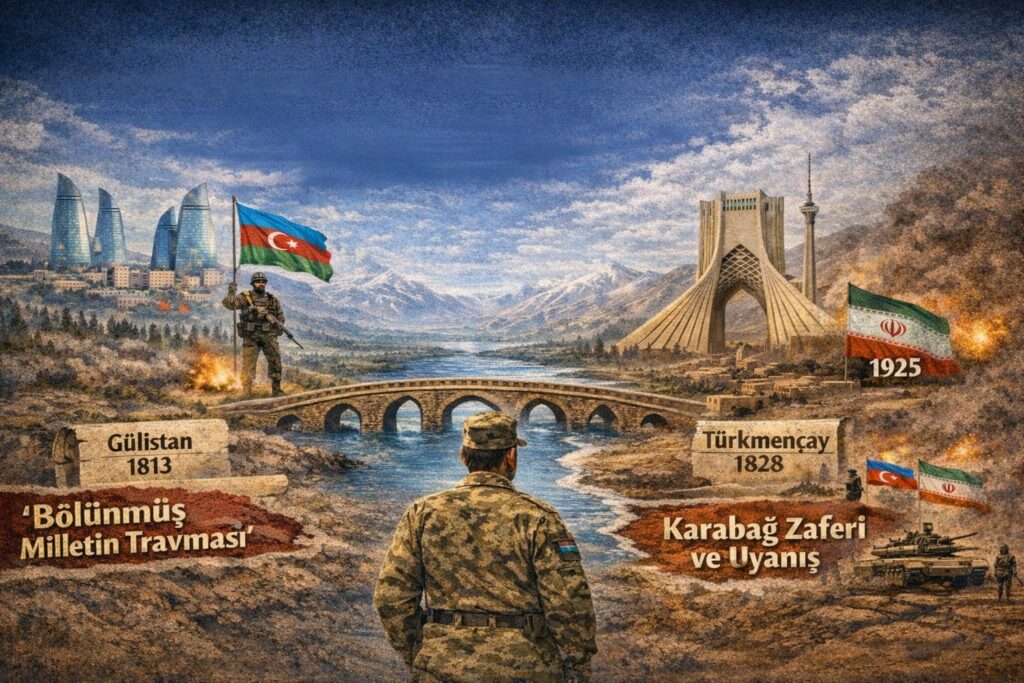
The military developments of 2020 and 2023 in the South Caucasus cannot be read merely as a territorial shift or a tactical victory for the Republic of Azerbaijan in the Karabakh War. These events have created an epistemological, identity-based, and political rupture in the collective consciousness of the Turks of South Azerbaijan—a rupture that has activated deeper layers of history, collective memory, nation-building policies in Iran, and the logic of power in Eurasia. From the perspective of the “Center for Strategic Studies of South Azerbaijan,” these developments must be understood as a quiet revolution in national consciousness; a revolution emerging not from the streets, but from battlefields, media, historical narratives, and the redefinition of the “nation-state” relationship.
ANALYSIS OF ECONOMIC STRUCTURAL PARALYSIS AND THE ACTIVATION OF PERIPHERAL FAULT LINES

Developments in 2026 point to an unprecedented convergence of accumulated crises in Iran. This situation has not only subjected the country’s monetary and fiscal system, but also its territorial integrity and the institutional legitimacy of governance, to an ontological challenge. The current condition goes beyond a cyclical fluctuation; it reflects a state of “polycrisis” in which macroeconomic indicators intersect with identity tensions in peripheral regions and push the state’s governing capacity to the point of collapse. This report examines, through a dialectical approach, the two main driving forces behind this breakdown: “economic structural paralysis” resulting from the institutionalization of parallel systems, and “ethnic fault lines” triggered by decades of systematic discrimination, and analyzes the scenarios facing this political entity.