BAKU IN THE AGE OF GEOECONOMIC WARS AND THE MULTIPOLAR ORDER

The “Global Risks Report 2026” published by the World Economic Forum portrays a world that has entered an “age of competition”; a world in which multilateralism is weakening and states are competing more aggressively than ever through economic, technological, and security instruments in order to expand their influence.
When we read this report from the perspective of Azerbaijan, it becomes clear that Baku stands at the very center of many of the developments highlighted in the report: geoeconomic wars, energy competition, crises over transportation corridors, regional tensions, and the redefinition of the balance of power in Eurasia.
In fact, the world described in the WEF report is precisely the world in which Azerbaijan has been rapidly consolidating its position in recent years.
THE ISLAMIC REPUBLIC, BALANCE OF POWER, AND THE NATIONALITIES QUESTION IN IRAN
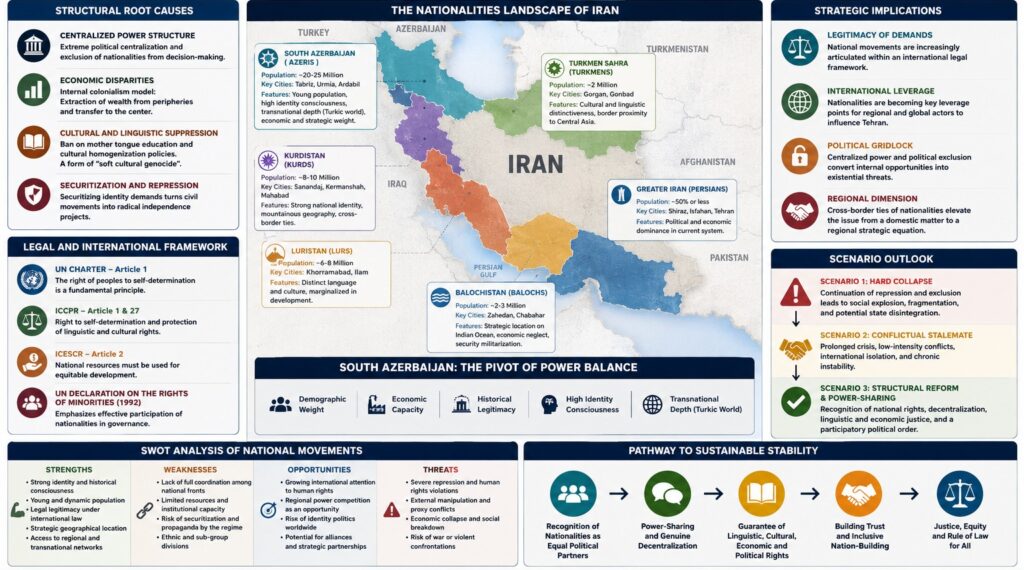
The nationalities question in Iran is no longer merely a cultural or identity-based issue. It has evolved into one of the central strategic variables shaping the political survival of the Islamic Republic and the future political order of the country. Any serious strategic assessment of Iran’s future must recognize that the widening gap between the center and the peripheries has simultaneously acquired legal, economic, security, and geopolitical dimensions.
Over the past four decades, the Islamic Republic has attempted to manage the nationalities issue through securitization, cultural control, and centralized governance. The outcome, however, has not been sustainable integration, but rather the accumulation of structural grievances. Today, a significant portion of political forces in non-Persian regions have moved beyond demands limited to cultural rights and entered a phase of political and governance-oriented mobilization. This transformation has fundamentally altered the nature of the crisis.
CONSEQUENCES OF IRAN’S WAR WITH THE US AND ISRAEL ON THE REPUBLIC OF AZERBAIJAN
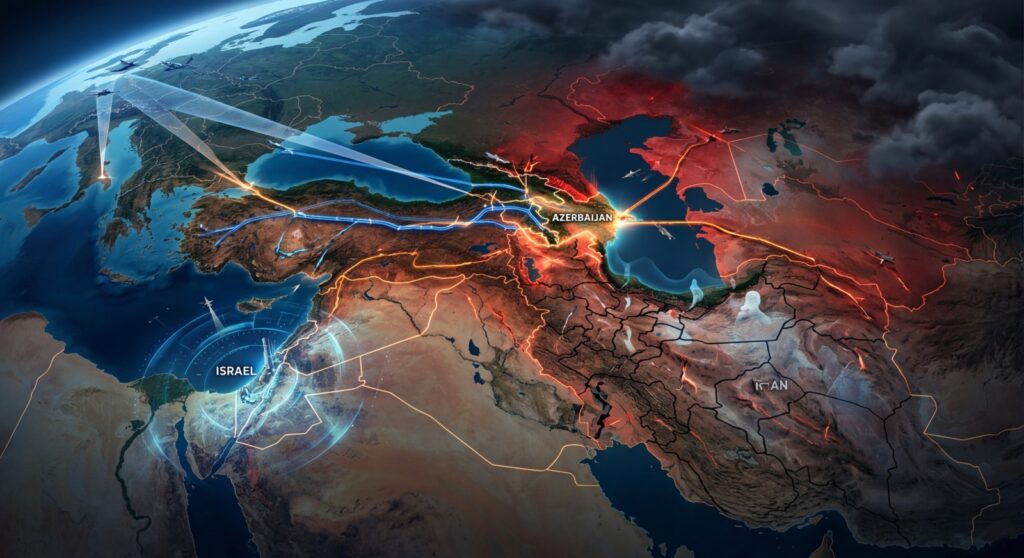
The ongoing war between Iran on one side and the United States and Israel on the other is no longer just a limited military conflict; this war is rapidly redefining the geopolitical map of the Middle East and its surroundings. The Republic of Azerbaijan, a country located at the crossroads of the Caucasus, Russia, Iran, and the Turkic world, has been exposed to the contradictory and complex consequences of this crisis more than many other actors. Baku’s current position can be summarized in one sentence: “A potential winner standing on the front line of danger.”
The military and political developments of late February and March 2026 have exposed West Asia and the Caucasus to one of the greatest historical ruptures. This report provides a comprehensive analysis of the consequences of this conflict on Baku across political, security, economic, and energy dimensions, and examines the grand strategies of Baku and Tehran until March 30, 2026, with a special focus on the factor of the 30-40 million Turks of South Azerbaijan.
STRATEGIC ANALYSIS OF CONFLICTS BETWEEN TURKS AND KURDS IN IRAN
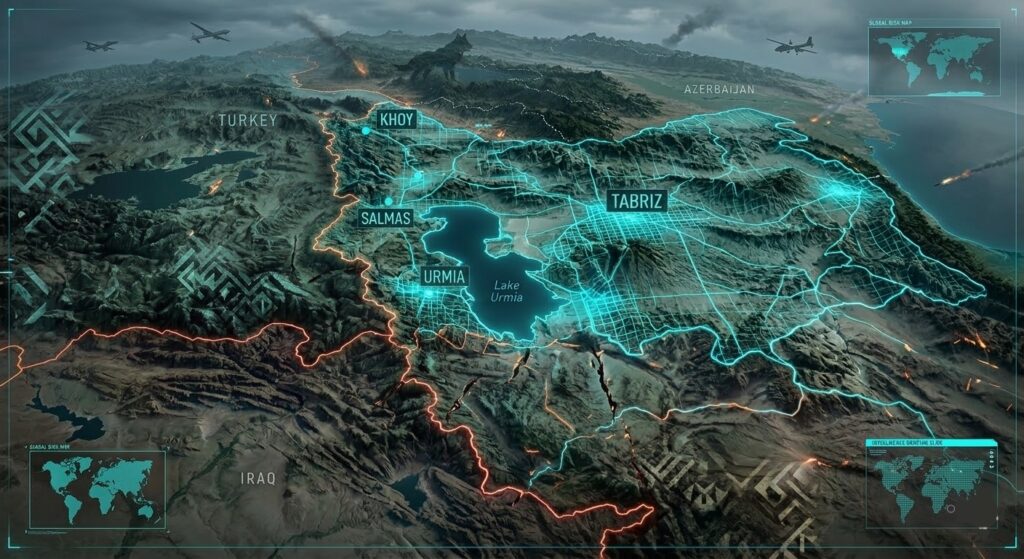
The geopolitical crises that have swept the Iranian plateau in early 2026 (1404 in the Solar Hijri calendar) transcend a classic military confrontation between states, acting as a catalyst for the redefinition of identity and territorial boundaries. While extensive US airstrikes under the operation “Epic Fury” and Israeli attacks dubbed “Roar of the Lions” have pushed the Islamic Republic’s defense infrastructure and command structure to the brink of collapse, leading to the physical elimination of Ali Khamenei, the historical fault lines between the Kurdish and Turkish nations in northwestern Iran have become active on an unprecedented scale. This report aims to provide an in-depth, multi-faceted examination of the current state of governance amidst the war, a critique of the political statements of Kurdish parties, an analysis of territorial claims in West Azerbaijan, and an outline of the perspective for a post-Islamic Republic order.
THE BLOODY BALANCE SHEET AND THE COLLAPSE OF THE REGIONAL ORDER: A ANALYSIS OF THE STRATEGIC CONSEQUENCES OF THE MIDDLE EAST WAR

As the world watches the flames of fire in the Middle East, the geopolitical order that had dominated the region for decades has turned into a pile of ashes in less than 100 hours. The launch of the joint US-Israeli operation at dawn on February 28, 2026, was not just a conventional military confrontation, but the beginning of a fundamental transformation in the political and economic geography of the world, the dimensions of which have transcended the borders of the Iranian Plateau and extended to the financial markets of New York and the strategic ports of East Asia. This report, examining the various dimensions of this crisis with an expert perspective, delves into the collapse of Iran’s internal structures, the global energy crisis, Turkey’s precarious situation, and the shifting balance of power in the region.
LEADERSHIP TRANSITION IN IRAN AND ITS GEOPOLITICAL CONSEQUENCESPolicy Report – 2026
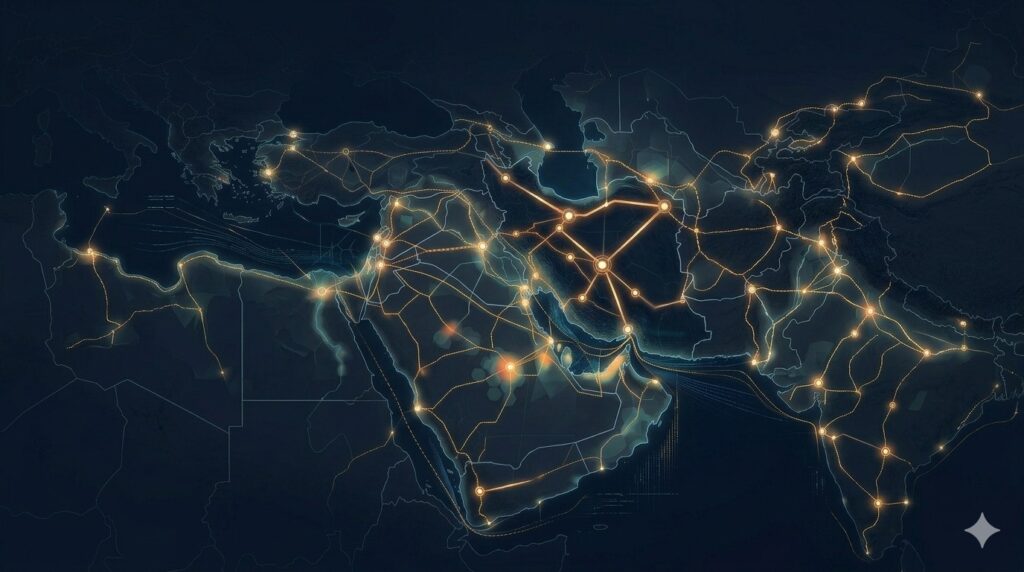
Executive Summary
In 2026, the Islamic Republic of Iran faces a multidimensional and unprecedented crisis threatening the very existence of its political structure. The sudden death of Ali Khamenei on February 28, 2026, during US and Israeli airstrikes, has not only created a power vacuum at the apex of the political pyramid but has also acted as a catalyst for the eruption of long-suppressed economic, social, and ethnic crises. This report provides an in-depth analysis of the succession process, key actors, the economic collapse, and the geopolitical consequences of this development, with a special emphasis on peripheral regions, including South Azerbaijan.
The power structure in Iran, built upon the theory of Velayat-e Faqih and the absolute concentration of authority in the hands of the Supreme Leader, now faces a test it has experienced only once before, in 1989. The fundamental difference between the current transition and that of 1989 is that while the transfer of power in 1989 occurred within a context of consensus among the revolutionary elite, the current transition is taking place amidst a full-scale regional war, rampant hyperinflation, and a nationwide uprising. Evidence indicates that the exchange rate has reached the threshold of 1.5 million rials to the dollar, and food inflation has exceeded 75%. Meanwhile, the role of the Islamic Revolutionary Guard Corps (IRGC) has evolved into a “shadow government” aiming for the complete militarization of power. For the peripheral regions, this transition period presents a strategic opportunity to redefine their relationship with the center, particularly in South Azerbaijan, where the environmental catastrophe of Lake Urmia and the geopolitical equations of new international corridors are shifting centrifugal forces in their favor.
IRAN ON THE VERGE OF RUPTURE; STRUCTURAL DIVERGENCE AND THE BALKANIZATION PUZZLE
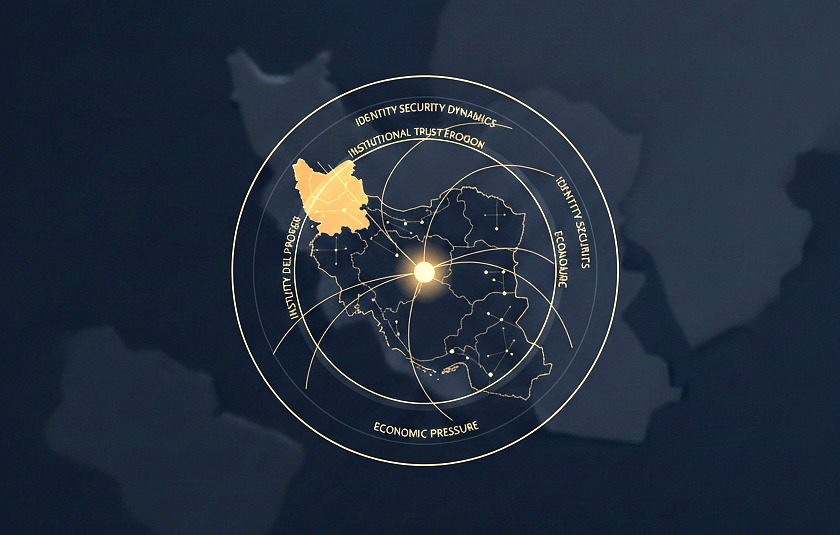
Iran’s internal developments in the mid-2020s cannot be explained solely by economic indicators or the usual cycles of political discontent. What is gradually taking shape is a complex product of economic pressure, erosion of institutional trust, and above all the accumulated fault lines in the realm of identity security. In this framework, “structural divergence” refers to the gradual distancing of development trajectories, political representation, and cultural reproduction in peripheral regions from the decision-making center in Tehran. The process has not yet reached a breaking point, but its signals are observable at multiple levels.
DONALD TRUMP’S NARCISSISM AND STRATEGY TOWARDS THE ISLAMIC REPUBLIC OF IRAN
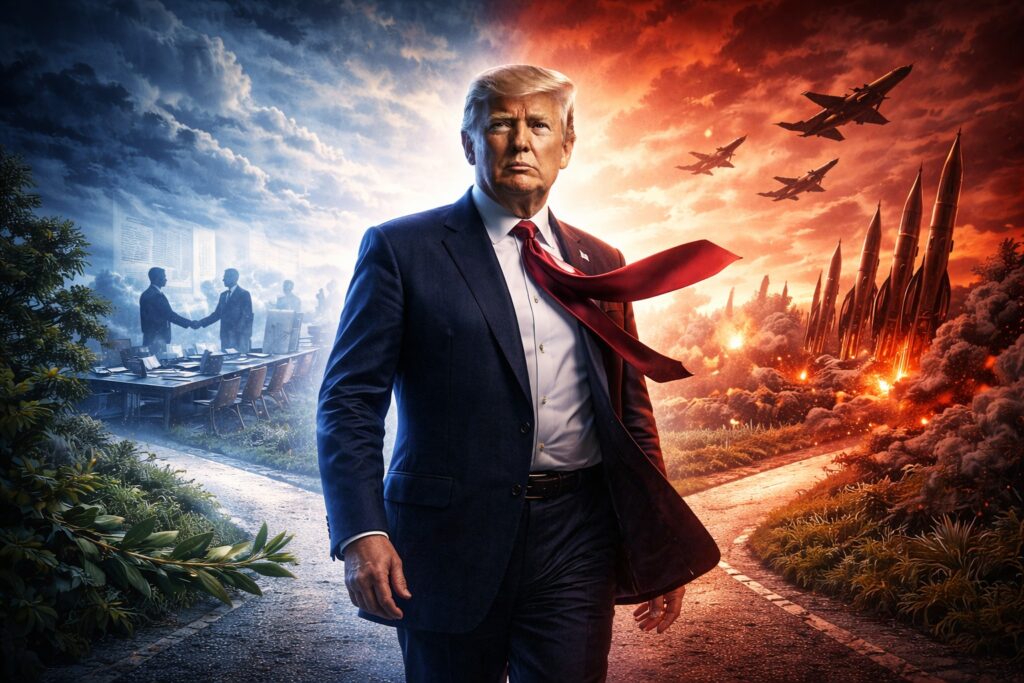
Analyzing Donald Trump’s behavioral patterns and discourse towards the Islamic Republic of Iran requires a deep exploration of the underlying layers of his personality and its connection to his lessons learned in the business world, in order to answer whether his actions are the product of conscious strategic planning or merely stemming from psychological impulses. The reality is that in Trump’s intellectual framework, the distinction between personality and strategy has practically disappeared; in other words, he employs his inherent characteristics as a tool to advance political goals. This approach, known in political literature as the “madman theory,” rests on the assumption that if a leader can convince his enemies that he is unpredictable, reckless, and even willing to take extreme actions, the opposing side will concede more advantages for fear of uncontrollable consequences. By leveraging this theory, Trump creates a strategic ambiguity around his decisions, keeping both enemies and even allies in a state of perpetual uncertainty. However, psychological analysts believe this behavior is not merely a strategic mask but is rooted in “Narcissistic Personality Disorder” (NPD), characterized by an excessive need for admiration, extreme sensitivity to criticism, and a tendency to divide the world into absolute poles of friend and enemy. These personality traits have led him to define Iran within a stereotypical and simplistic framework as the “bad actor” and “absolute threat,” an approach that sacrifices geopolitical complexities for simple, black-and-white answers.
PEZESHKIAN IN THE BALANCE OF THE GORBACHEV MODEL AND THE STRUCTURAL ENTROPY OF THE ISLAMIC REPUBLIC
Political transformation in ideological authoritarian systems tends to crystallize at moments when economic crisis and social blockage converge, pushing the rift between the ruling structure and society to a breaking point. Under such conditions, the emergence of figures who promise reform from within raises fundamental questions about whether structural change is possible without regime collapse. Mikhail Gorbachev, the last leader of the Soviet Union, remains the quintessential symbol of an attempted systemic renewal that ultimately resulted in the dissolution of the very system it sought to save.
THE DOCTRINE OF THE ORGANIZATION OF TURKIC STATES AND SOUTHERN AZERBAIJAN
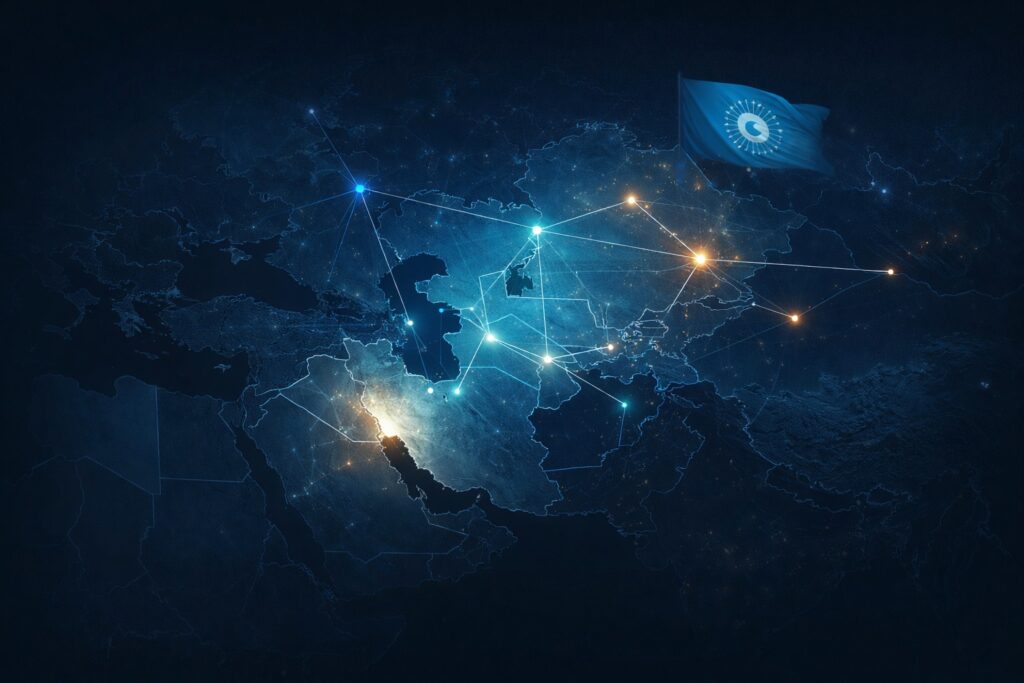
The power dynamics in the Eurasian region following the collapse of the Soviet Union have opened a new path for redefining national and regional identities. At the center of this lies the emergence of the Organization of Turkic States (OTS) as a rising power pole. Founded on linguistic, cultural, and historical commonalities, this organization has gradually transformed from a cultural consultative forum into an international institution with strategic, security, and defense dimensions. In this process, the issue of “South Azerbaijan,” referring to the Turkic-populated regions in the north and northwest of Iran, has become one of the most sensitive intersections of the OTS’s geopolitical interests and the national security of the Islamic Republic of Iran. A detailed analysis of the organization’s approaches reveals that the doctrine of “Turkic World Unity” does not necessarily stop at the political borders of member states but views “kin peoples” in neighboring countries, especially Iran, as part of the Turkic civilizational and identity sphere.