DONALD TRUMP’S NARCISSISM AND STRATEGY TOWARDS THE ISLAMIC REPUBLIC OF IRAN
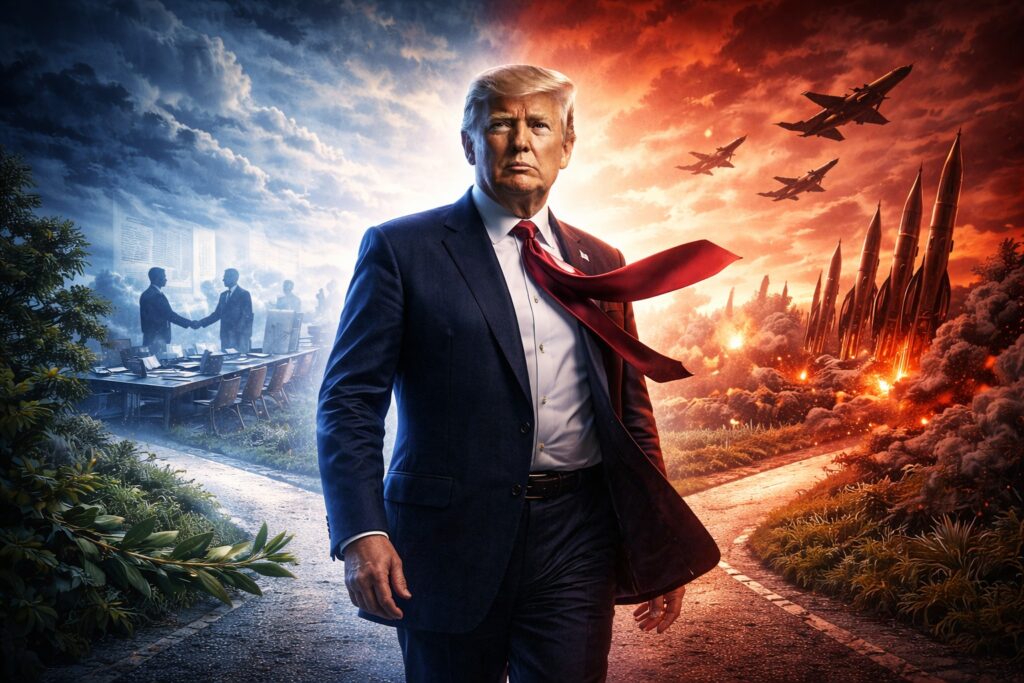
Analyzing Donald Trump’s behavioral patterns and discourse towards the Islamic Republic of Iran requires a deep exploration of the underlying layers of his personality and its connection to his lessons learned in the business world, in order to answer whether his actions are the product of conscious strategic planning or merely stemming from psychological impulses. The reality is that in Trump’s intellectual framework, the distinction between personality and strategy has practically disappeared; in other words, he employs his inherent characteristics as a tool to advance political goals. This approach, known in political literature as the “madman theory,” rests on the assumption that if a leader can convince his enemies that he is unpredictable, reckless, and even willing to take extreme actions, the opposing side will concede more advantages for fear of uncontrollable consequences. By leveraging this theory, Trump creates a strategic ambiguity around his decisions, keeping both enemies and even allies in a state of perpetual uncertainty. However, psychological analysts believe this behavior is not merely a strategic mask but is rooted in “Narcissistic Personality Disorder” (NPD), characterized by an excessive need for admiration, extreme sensitivity to criticism, and a tendency to divide the world into absolute poles of friend and enemy. These personality traits have led him to define Iran within a stereotypical and simplistic framework as the “bad actor” and “absolute threat,” an approach that sacrifices geopolitical complexities for simple, black-and-white answers.
STRATEGIC AND CONTENT ANALYSIS OF THE “TBA TV” MEDIA NETWORK

This analytical report has been prepared and compiled by the South Azerbaijan Center for Strategic Studies (SACSS) with the aim of examining diaspora media and their impact on regional geopolitical equations.
The emergence and continued activity of diaspora media on digital platforms, especially in regions marked by geopolitical and ethnic tensions is a phenomenon that requires in-depth analysis from the perspectives of communication sciences and security studies. The TBA TV network, operating on YouTube under the handles @TBATV and @TBATVaz, represents a prominent example of media that define their mission beyond mere information dissemination and function as active agents in redefining national identity and steering political movements. By focusing on Azerbaijanis worldwide, and particularly on the issue of South Azerbaijan, this network seeks to build a bridge between domestic demands and international pressures through the expertise of diaspora elites. This report provides a comprehensive examination of the channel’s structural, content-based, theoretical, and user-interaction dimensions in order to clarify its role in representing regional crises and influencing public opinion.
PEZESHKIAN IN THE BALANCE OF THE GORBACHEV MODEL AND THE STRUCTURAL ENTROPY OF THE ISLAMIC REPUBLIC

Political transformation in ideological authoritarian systems tends to crystallize at moments when economic crisis and social blockage converge, pushing the rift between the ruling structure and society to a breaking point. Under such conditions, the emergence of figures who promise reform from within raises fundamental questions about whether structural change is possible without regime collapse. Mikhail Gorbachev, the last leader of the Soviet Union, remains the quintessential symbol of an attempted systemic renewal that ultimately resulted in the dissolution of the very system it sought to save.
Digital Repression and the Future of Civil Resistance in Iran

The paradigmatic shift in the Islamic Republic of Iran’s digital governance between 2024 and 2026 indicates a transition from “reactive censorship” to “structural and preemptive authoritarianism.” This process, designed to achieve “absolute cyber sovereignty,” has moved beyond simple website blocking toward redesigning the National Information Network (NIN) architecture and leveraging Artificial Intelligence for biometric surveillance. In this framework, the internet is no longer defined as a public utility, but as a state privilege where access is classified based on social standing, political loyalty, and security imperatives. This policy document examines the technical, legal, economic, and social dimensions of this transformation and offers strategies for resistance.
TRACTOR FC: THE GEOPOLITICAL IDENTITY STRONGHOLD OF SOUTH AZERBAIJAN
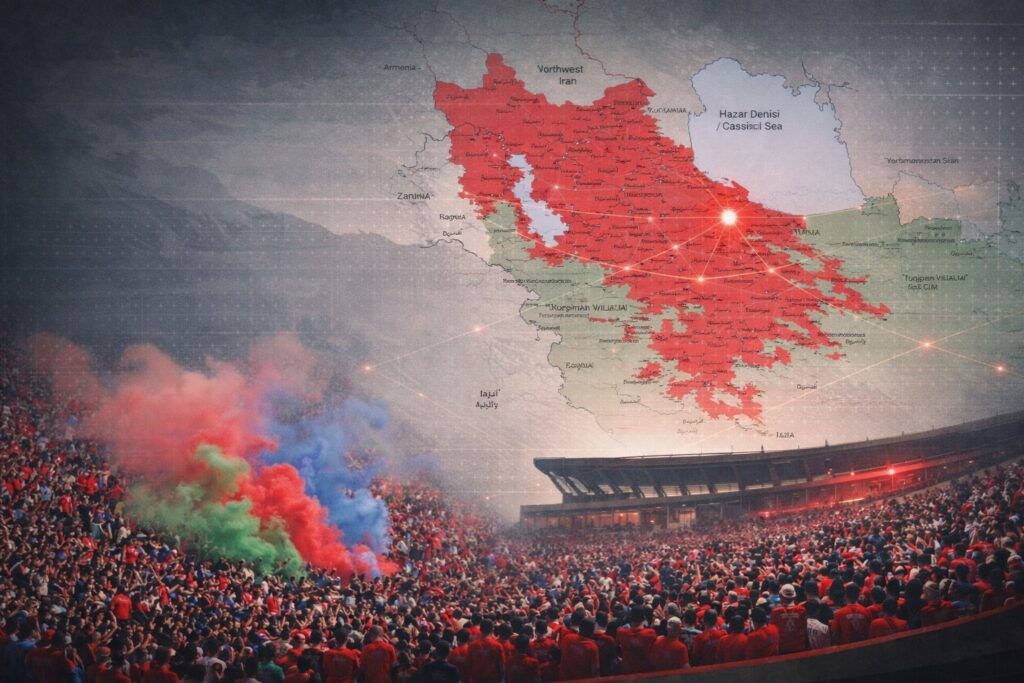
In modern political science and international relations, sport is no longer regarded merely as a field of entertainment or competition, but rather as one of the most powerful arenas for the expression of suppressed collective identities, political demands, and ethnic mobilization. In the northwestern region of the Islamic Republic of Iran known as South Azerbaijan, Tractor Football Club (formerly Tractor Sazi FC) has gone far beyond being a conventional football team and has become the “national” representative of a people and the principal platform of their civil rights struggle. Based in Tabriz, this club functions as a resistance anthem reflecting the collective will of a population of nearly 40 million against the centralist and Persian-centric assimilation policies pursued by the Iranian state for decades.
GAME-CHANGER” STRATEGY: IRAN’S GEOECONOMIC REPOSITIONING IN RESPONSE TO THE TRUMP 2.0 DOCTRINE AND THE ZANGEZUR CORRIDOR (TRIPP)
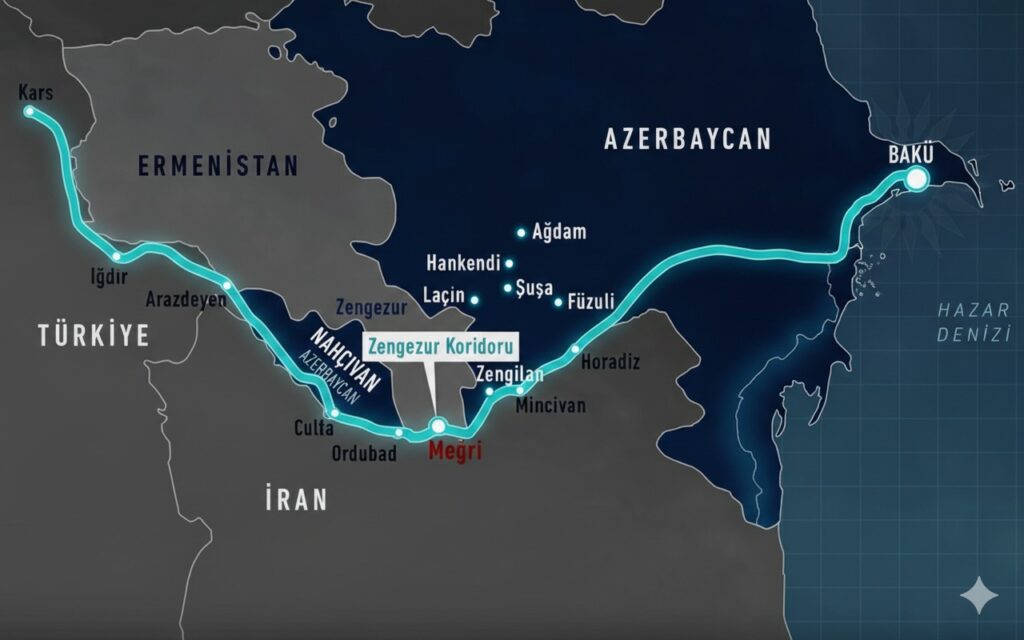
The re-election of Donald Trump as President of the United States in 2025, followed by the 12-day war between Iran and Israel, weakened Iran’s regional deterrence architecture and triggered a significant restructuring of the balance of power in the South Caucasus. In this context, the “Trump Route for International Peace and Prosperity” (TRIPP) agreement—brokered under U.S. auspices and signed between Armenia and Azerbaijan—has established the institutional foundation of a new geopolitical and geoeconomic order in the South Caucasus.
THE DOCTRINE OF THE ORGANIZATION OF TURKIC STATES AND SOUTHERN AZERBAIJAN
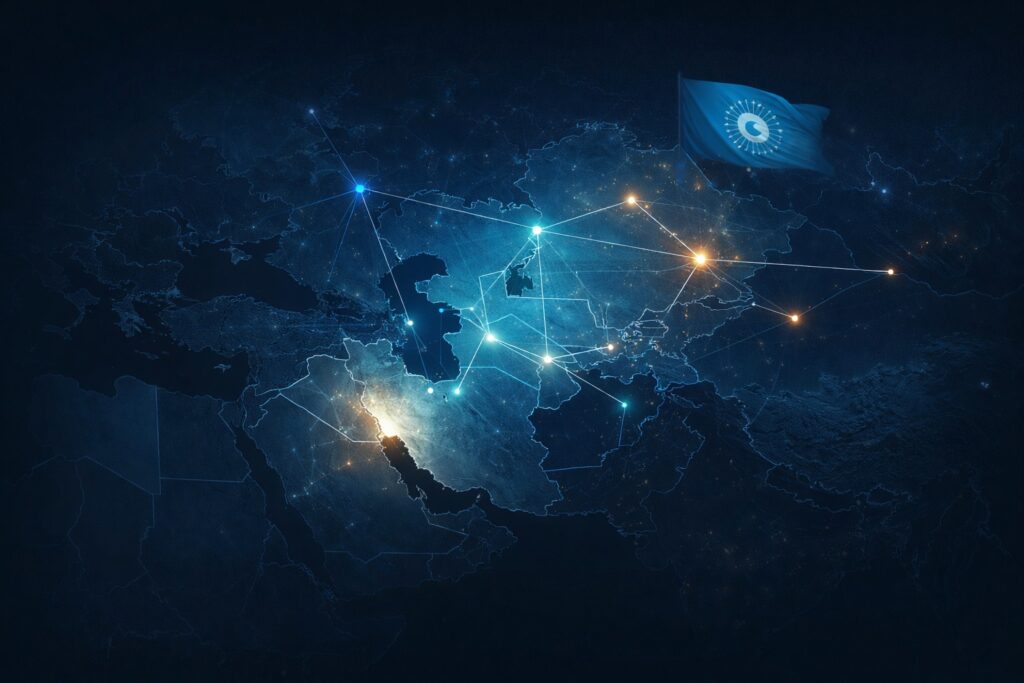
The power dynamics in the Eurasian region following the collapse of the Soviet Union have opened a new path for redefining national and regional identities. At the center of this lies the emergence of the Organization of Turkic States (OTS) as a rising power pole. Founded on linguistic, cultural, and historical commonalities, this organization has gradually transformed from a cultural consultative forum into an international institution with strategic, security, and defense dimensions. In this process, the issue of “South Azerbaijan,” referring to the Turkic-populated regions in the north and northwest of Iran, has become one of the most sensitive intersections of the OTS’s geopolitical interests and the national security of the Islamic Republic of Iran. A detailed analysis of the organization’s approaches reveals that the doctrine of “Turkic World Unity” does not necessarily stop at the political borders of member states but views “kin peoples” in neighboring countries, especially Iran, as part of the Turkic civilizational and identity sphere.
STRATEGIC EROSION OF FEAR AND THE COLLAPSE OF MENTAL AUTHORITY

In the field of political science and the sociology of power, “fear” has always been examined as one of the oldest and most complex instruments of rule. From ancient city-states to the totalitarian regimes of the 20th century and contemporary authoritarian systems, the creation of fear has functioned not only as a means of physical repression but as a grand strategy for survival in the absence of democratic legitimacy.
The Deadly Negotiation Trap: An Anatomy Of Trump’s Hybrid Pressure Strategy Against Iran In 2025

In the autumn of 2025, the Islamic Republic of Iran stands at a crossroads of unprecedented geopolitical pressure and existential threats in its forty-year history. Donald Trump’s return to the White House is not a temporary political event; it marks the starting point of a new security doctrine called “Project 2025,” which transforms Washington’s paradigm of confrontation with Tehran from “containment” to “structural change.
IRAN’S ECONOMIC FREE ZONES AND THE FAILURE OF DEVELOPMENT IN SOUTH AZERBAIJAN
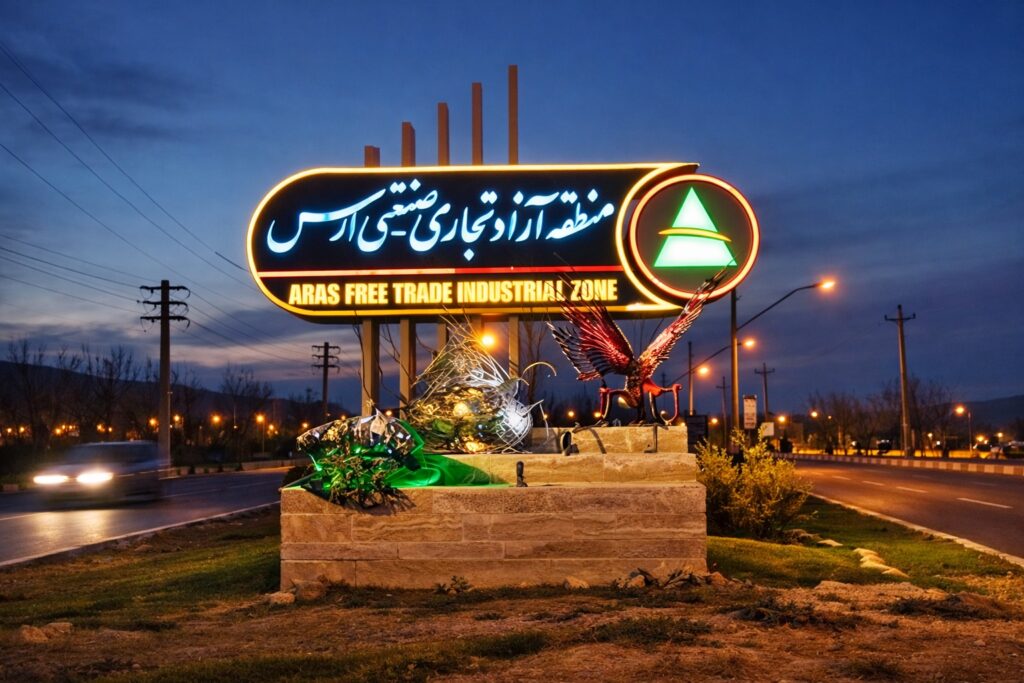
Economic development in developing countries, particularly those governed by rentier and centralized structures, has always faced fundamental challenges regarding the fair distribution of resources and opportunities. Within Iran’s political geography, these challenges transcend conventional economic inequalities, becoming intertwined with complex layers of ethnic discrimination, the securitization of space, and “internal colonialism” approaches. The Aras and Maku Free Trade-Industrial Zones, located in the heart of South Azerbaijan, are stark examples of the contradiction between the regime’s development-oriented slogans and the exploitative, controlling realities on the ground. Utilizing theoretical frameworks from political economy and the sociology of development, this analytical report seeks to deeply examine the failure of these two regions in achieving sustainable development goals and the reasons they have transformed into tools for reproducing central dominance over the periphery.