THE STRATEGIC TRANSFORMATION OF TRADE, ENERGY, AND FINANCIAL RELATIONS BETWEEN TÜRKİYE AND IRAN UNDER THE SHADOW OF THE IRAN-WEST WAR
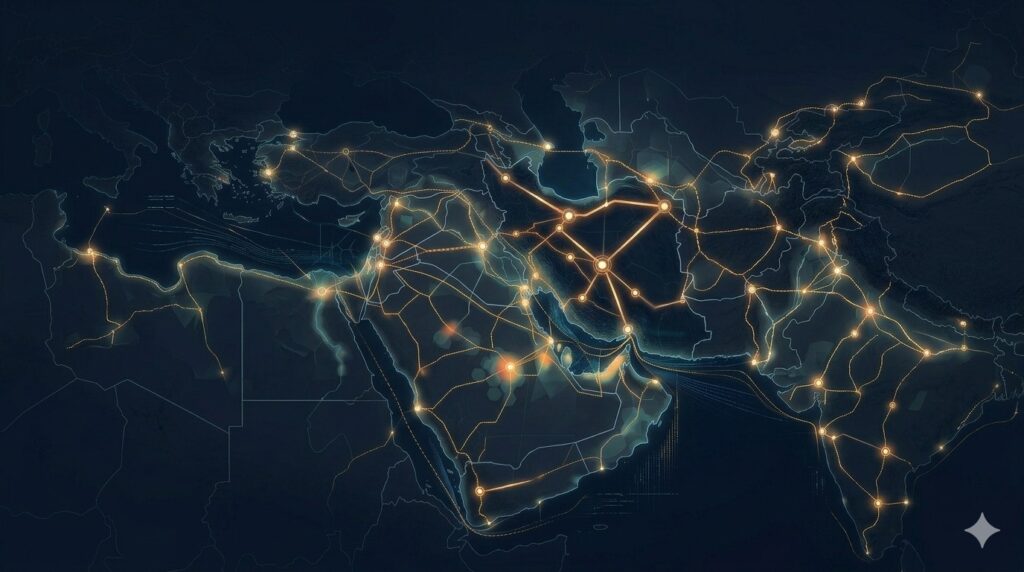
The “Operation Epic Fury,” launched on February 28, 2026, by the coalition of the United States and Israel against Iran’s military and nuclear facilities, has fundamentally reshaped the political-economic map of the Middle East. This conflict is not merely a regional military engagement; it also represents a systemic rupture point in which global energy supply security, international trade routes, and regional capital flows have been reconfigured. The process that began with Iran’s declaration on March 4, 2026, that it would close the Strait of Hormuz has dragged the global economy into a stagflationary spiral reminiscent of the oil shocks of the 1970s. Consequently, the nature of bilateral economic relations between Türkiye and Iran has evolved into a security-oriented model of mutual interdependence.
LEADERSHIP TRANSITION IN IRAN AND ITS GEOPOLITICAL CONSEQUENCESPolicy Report – 2026
Executive Summary
In 2026, the Islamic Republic of Iran faces a multidimensional and unprecedented crisis threatening the very existence of its political structure. The sudden death of Ali Khamenei on February 28, 2026, during US and Israeli airstrikes, has not only created a power vacuum at the apex of the political pyramid but has also acted as a catalyst for the eruption of long-suppressed economic, social, and ethnic crises. This report provides an in-depth analysis of the succession process, key actors, the economic collapse, and the geopolitical consequences of this development, with a special emphasis on peripheral regions, including South Azerbaijan.
The power structure in Iran, built upon the theory of Velayat-e Faqih and the absolute concentration of authority in the hands of the Supreme Leader, now faces a test it has experienced only once before, in 1989. The fundamental difference between the current transition and that of 1989 is that while the transfer of power in 1989 occurred within a context of consensus among the revolutionary elite, the current transition is taking place amidst a full-scale regional war, rampant hyperinflation, and a nationwide uprising. Evidence indicates that the exchange rate has reached the threshold of 1.5 million rials to the dollar, and food inflation has exceeded 75%. Meanwhile, the role of the Islamic Revolutionary Guard Corps (IRGC) has evolved into a “shadow government” aiming for the complete militarization of power. For the peripheral regions, this transition period presents a strategic opportunity to redefine their relationship with the center, particularly in South Azerbaijan, where the environmental catastrophe of Lake Urmia and the geopolitical equations of new international corridors are shifting centrifugal forces in their favor.
IRAN-TÜRKİYE RELATIONS IN THE PERSPECTIVE OF REGIONAL DEVELOPMENTS
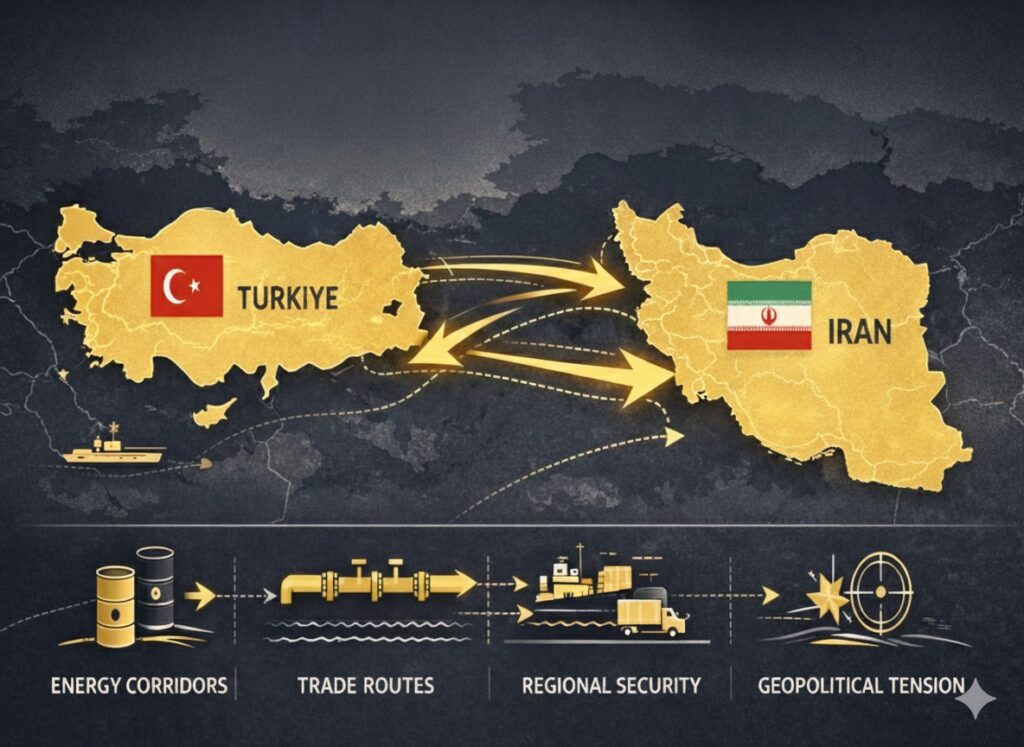
The two-year period of 2025 and 2026 has been recorded as a decisive juncture in the history of Middle Eastern diplomacy, during which the regional order was redefined under the influence of surgical military interventions and the return of maximum pressure doctrines. In this context, relations between Iran and Turkey have shifted from a traditional managed rivalry towards a form of “threshold management”; where Ankara views Tehran’s stability not as a diplomatic choice, but as a pillar of its own national security. The developments of this period, especially after the large-scale military attack by the United States and Israel on Iran’s nuclear facilities in June 2025, dubbed “Operation Rising Lion,” altered the balance of power unprecedentedly in favor of Turkey. The fall of the Assad regime in Syria in late 2024 and early 2025 also dealt a structural blow to the “Axis of Resistance,” severely reducing Iran’s regional influence, while consolidating Turkey as the new hegemonic actor in the Levant and northern Iraq.